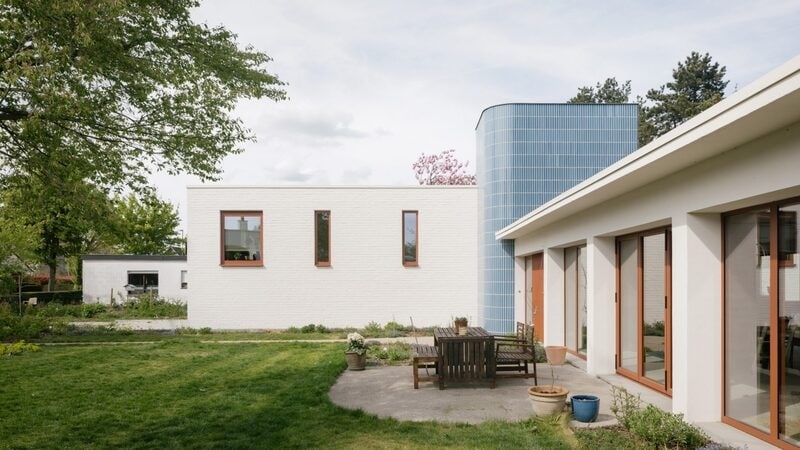
The Daniel Bungalow in Ghent, Belgium, is a historic residential building that has been renovated and reconfigured by design practice Felt. The project reinvigorates the early 20th-century bungalow by introducing a vibrant, contemporary interior while respecting the house’s original architectural features. Felt’s approach retained and restored key structural elements such as the timber framework and existing ornamentation, then layered bold colours, custom millwork, and bespoke furniture to create dynamic spatial sequences throughout the home. Large openings and adjusted circulation paths improve light flow and visual connection between rooms.
Distinctive interventions include sculptural seating and storage that articulate thresholds and gather functions into integrated forms, helping unify the interior’s aesthetic and performance. Surfaces feature saturated hues juxtaposed with natural wood tones and tactile materials that lend contrast and warmth.
Image Credit: Stijn Bollaert
What Makes This Trend Stand Out
- Contemporary-historic Fusion
- Merging modern design elements with historic architecture offers a unique aesthetic that appeals to both preservationists and trendsetters, creating new ways to innovate in the home renovation industry.
- Dynamic Spatial Sequences
- Developing adaptable spaces through custom millwork and bespoke furniture allows for flexible living environments that cater to evolving lifestyle needs and modern functionality.
- Integrated Functional Aesthetics
- Combining functional furnishings with sculptural design enhances living spaces by providing cohesive visual appeal and utility, inspiring new applications in interior design.
Sectors Adopting This
- Architecture and Design
- Incorporating playful and contemporary interiors into historic buildings disrupts traditional restoration practices, offering novel approaches for architects seeking balance between old and new.
- Furniture Manufacturing
- The demand for bespoke furniture tailored to fit unique spatial configurations presents opportunities for furniture manufacturers to create customizable solutions that blend functionality with artistic expression.
- Home Renovation
- Revamping historic homes with modern aesthetics introduces fresh possibilities for the home renovation industry, encouraging innovation in blending old-world charm with current design trends.