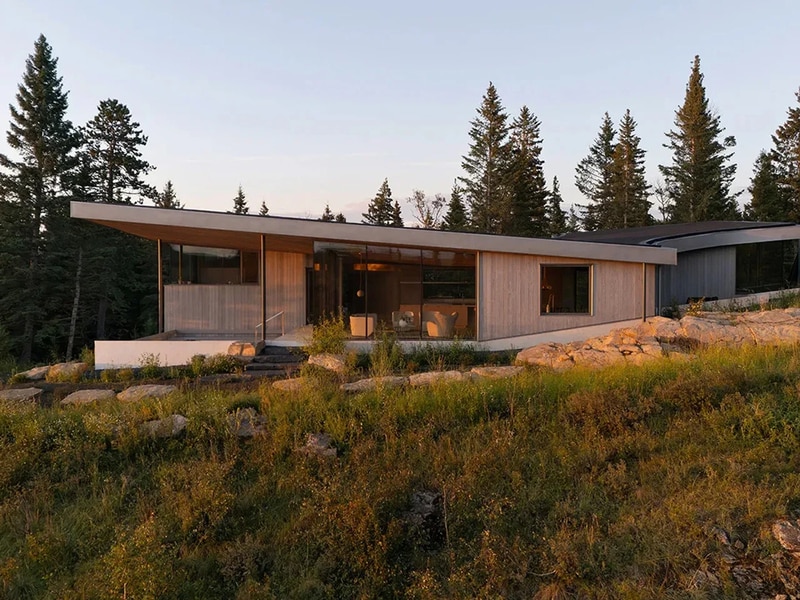
Cut Out House is a family vacation residence designed by Young Projects in the foothills of the Canadian Rocky Mountains. Positioned within a low-density residential setting, the house is organized around contrasting relationships with its surroundings. Private areas are oriented toward the adjacent woodland, while communal living spaces open toward expansive mountain views. The design is anchored by a distinctive butterfly roof, which shapes both the building’s appearance and its internal organization by directing views and defining the hierarchy of spaces.
The project takes its name from a series of carved openings and recesses that remove portions of the building’s mass to create a more sculptural form. These strategic subtractions contribute to the house’s visual identity while framing views and strengthening connections to the landscape. The exterior is clad in gray Accoya wood, a durable material chosen for its ability to weather naturally and blend with the surrounding terrain.
What's Driving This Trend
- Sculptural Subtractive Design
- Carved openings and recessed volumes signal potential for residences that use negative space to create distinctive identities, framed views, and deeper landscape integration.
- View-oriented Rooflines
- Butterfly roofs are evolving beyond signature silhouettes into spatial organizing systems that reshape interior hierarchy while enhancing natural light, drainage, and scenic orientation.
- Weathering Wood Exteriors
- Durable timber cladding such as Accoya reflects growing demand for low-maintenance building envelopes that blend into natural settings while supporting premium sustainable design.
Who This Affects Most
- Residential Architecture
- Mountain retreats with sculptural forms and site-specific layouts highlight new possibilities for homes that merge privacy, communal experience, and immersive environmental connection.
- Luxury Real Estate
- Distinctive roof profiles, panoramic living areas, and material-driven aesthetics create differentiation in vacation properties where architectural character increasingly defines market value.
- Sustainable Building Materials
- Naturally weathering, high-performance wood products are positioned to disrupt exterior finishes by combining durability, ecological appeal, and regionally responsive visual character.