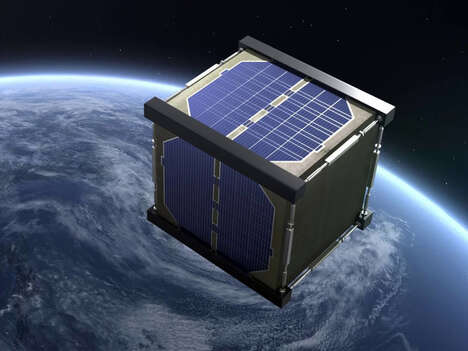
I'm pretty sure the CubeSat XI-V is more active on Twitter than I am. Given the way I make my money, that isn't a good thing.
The CubeSat XI-V was developed by Nakasuka Lab at the University of Tokyo. This satellite tweets about its internal temperature and location, and will occasionally throw in a Twitpic or two to keep things fresh. Whatever the CubeSat XI-V is doing must be working--at the time of this writing, the satellite has 2,729 followers. I never thought I'd lose the social media battle to a satellite. Prove me wrong technology.
What's Driving This Trend
- Social Media Satellites
- Developing satellites with social media capabilities opens up opportunities for real-time communication and engagement with a wider audience.
- Internet of Things Connectivity
- Integrating sensors and communication technology into satellites enables the sharing of live data and updates, paving the way for innovative applications in various industries.
- Advancements in Small Satellites
- Improving the capabilities of small satellites like CubeSats allows for cost-effective and agile space missions, encouraging new possibilities for research and commercial ventures.
Who This Affects Most
- Space Technology
- Integrating social media capabilities into satellites can revolutionize how space organizations communicate with the public and conduct experiments.
- Communications
- The development of social media satellites presents opportunities for enhanced connectivity and communication infrastructure, benefiting both individuals and businesses.
- Media and Entertainment
- Social media satellites offer a novel way for media and entertainment companies to engage with audiences, providing unique content and immersive experiences.