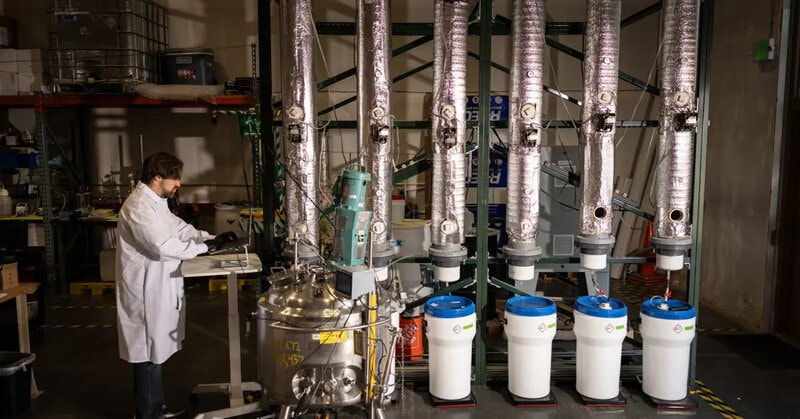
Endolith is bringing trained bioleaching microbes to Arizona's Carlota Mine, where KGHM will use them to pull extra copper from aging heap-leach piles while using less sulfuric acid. The Denver startup grows the acid-tolerant organisms in onsite bioreactors and feeds them into the leaching system, where they free copper by breaking down iron and sulfur compounds.
The approach goes beyond older bioleaching methods by using mixed microbial communities rather than a single strain, then changing the blend as heat and acidity shift inside each heap. Endolith targets at least 10% additional copper recovery from low-grade ore, a gain aimed at mines already running below peak output.
A 10% lift from low-grade ore makes this a life-extension tool for mining operators that cannot wait years for a new copper project. Onsite monitoring turns bioleaching from a set-and-forget treatment into a managed process, widening where microbial extraction fits across older mine assets.
Image Credit: Endolith
Key Themes Behind This Trend
- Adaptive Microbial Mining
- Mixed bioleaching communities that shift with heap conditions create new value from low-grade ore by turning biological extraction into a controllable production system.
- Mine Life Extension
- Aging heap-leach sites gain renewed economic relevance when incremental recovery technologies increase output without requiring entirely new copper projects.
- Low-acid Extraction
- Reduced sulfuric acid dependence signals a cleaner processing model that can lower operating strain while improving metal recovery from difficult ore bodies.
Where This Applies
- Copper Mining
- Producers facing declining ore grades can benefit from microbial recovery systems that unlock additional supply from existing mine infrastructure.
- Biotechnology
- Engineered and trained microbial blends open commercial pathways for industrial biology in harsh environments beyond traditional lab-based applications.
- Mining Equipment and Services
- Onsite bioreactors, monitoring platforms, and dosing systems expand the role of service providers in managing biological extraction as an operational process.