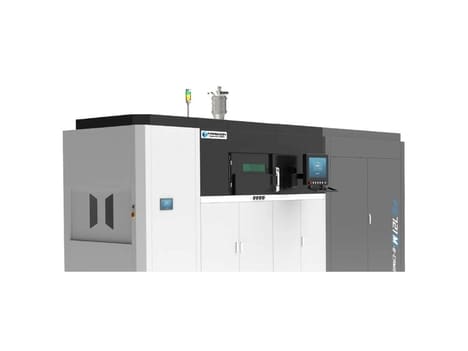
Compact industrial 3D printing is becoming more efficient as TPM3D introduces its CF250 + PPS250 system, designed to increase manufacturing output without requiring extensive floor space. The upgraded platform combines a larger printing chamber with automated powder management, helping engineering teams and smaller manufacturers handle production more efficiently.
Compared with the earlier CF200, the CF250 provides 67% more build volume while requiring only 20% additional floor space. Its 0.53-square-meter footprint and 220 V operation simplify installation in smaller facilities. The accompanying PPS250 automates powder removal, screening, mixing, and feeding, reducing manual handling between production cycles.
For manufacturers, the system could lower production costs by accommodating more components per build and reducing repetitive tasks. Its compact design may also help TPM3D reach laboratories, engineering departments, and service providers seeking professional manufacturing capabilities without larger industrial installations.
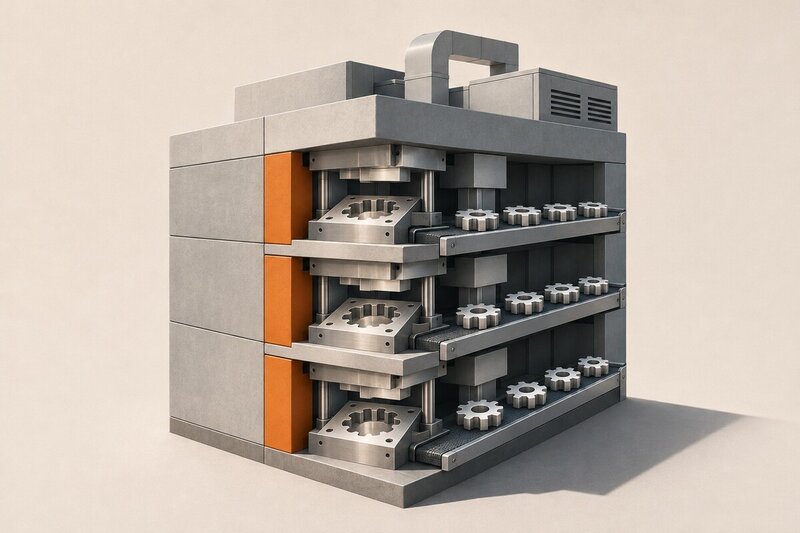
Image Credit: AI-generated
What Makes This Trend Stand Out
- Compact Additive Manufacturing
- Smaller-footprint 3D printing systems are reshaping factory planning by bringing industrial-scale output into labs, workshops, and space-constrained production environments.
- Automated Powder Handling
- Integrated powder removal, screening, mixing, and feeding capabilities create efficiency gains by reducing labor-intensive post-processing steps in additive manufacturing workflows.
- Distributed Micro-production
- Professional manufacturing tools suited to smaller facilities support localized production models where engineering teams and service providers can produce end-use parts closer to demand.
Sectors Adopting This
- Industrial 3D Printing
- More efficient compact platforms expand access to high-volume additive production without the infrastructure demands of traditional large-format industrial systems.
- Manufacturing Equipment
- Space-saving machinery with higher throughput potential signals a shift toward equipment portfolios designed for flexible, modular, and lower-cost production expansion.
- Engineering Services
- Advanced additive systems sized for departmental use strengthen the role of engineering teams in prototyping, testing, and small-batch manufacturing without outsourcing.
Featured Reports

When AI Builds the Basket

American Dream Fatigue