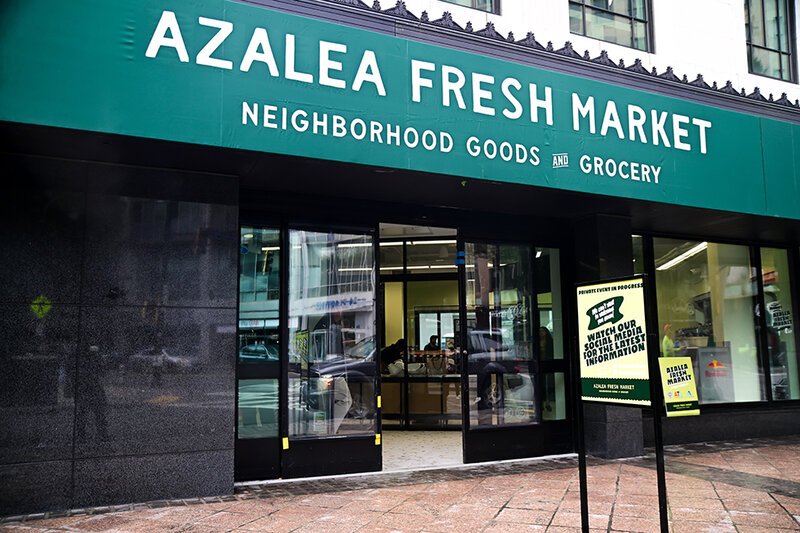
IGA’s Community Development program, led by General Manager Ashley Page and Director of Community Store Development Jimmy Wright, is scaling grocery projects for underserved areas, with Atlanta’s Azalea Fresh Market stores serving as flagship examples. The model combines public and private investment, local hiring, community input and distributor matching tailored to each location.
The program supports about two dozen active projects nationwide. A second Azalea Fresh Market, owned by entrepreneur Paul Nair, will open Oct. 28 at Campbellton Plaza. Preparations include forming a community board and planning a safety summit, job fair and local product summit that will invite area farmers and vendors to become suppliers. For communities, the model can restore grocery access while creating local sourcing and employment opportunities. It reflects a shift toward community-led, public-private grocery development rather than standardized retail expansion.
For IGA, distributor relationships, technical assistance and ongoing support can reduce risk for independent operators while extending its network into markets conventional grocers have not served.
Image Credit: The Shelby Report
Why This Trend Is Growing
- Community-led Grocery
- Neighborhood boards, local feedback loops and place-based store planning create room for food retailers to design formats that reflect underserved communities rather than standardized expansion models.
- Public-private Retail
- Blended funding between municipalities, private operators and distributors is reshaping grocery development by reducing entry barriers in markets considered too risky by conventional chains.
- Local Supplier Integration
- Regional farmers, vendors and entrepreneurs gain new relevance as grocers build sourcing programs that connect store shelves with nearby producers and community economic priorities.
Industries Being Reshaped
- Grocery Retail
- Independent grocery operators can emerge as resilient anchors in food-access gaps through technical assistance, distributor partnerships and locally adapted retail models.
- Economic Development
- Community grocery projects link food access, job creation and small-business participation, positioning retail infrastructure as a catalyst for neighborhood revitalization.
- Food Distribution
- Distributor networks become strategic enablers when they match independent stores with scalable support systems, localized inventory planning and underserved-market expansion pathways.