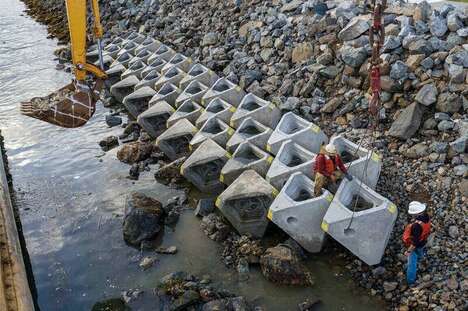
The need for easy-to-assemble, cheap building materials was made evident in the days and weeks following March's horrific earthquake, but the Japanese firm TIS & Partners has pioneered a new "CO2 Structure" that could completely change post-emergency reconstruction.
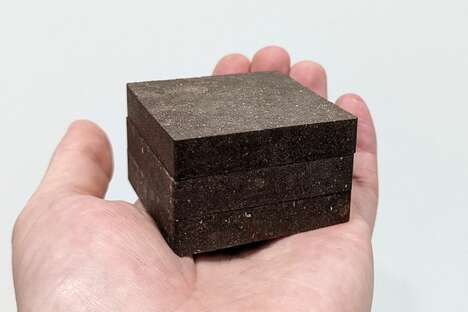
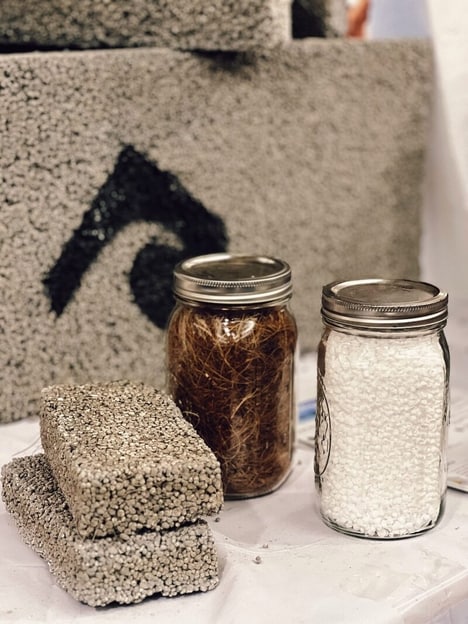
Whereas it takes concrete nearly 28 days to reach 100% of its design strength, the CO2 Structure can be cured, dried and ready for use in less than a minute -- plus, it's stronger than asphalt and concrete. By injecting carbon dioxide directly into a silica (sand and quartz), adding a few organic compounds and letting the entire concoction cool off, you're left with a building material with twice the tensile strength of brick.
The CO2 Structure could very easily revolutionize emergency doctrine and will likely save countless lives. Oh, and unlike concrete, this material needs little (if any) steel reinforcements. Wow!
What's Driving This Trend
- Rapid Construction
- The CO2 structure's fast curing time can revolutionize the way buildings are constructed, especially in emergency situations.
- Stronger Building Materials
- The CO2 Structure's twice the tensile strength of brick could take over concrete as the most used building material.
- Sustainable Building Materials
- By using sand and carbon dioxide, the CO2 Structure creates a much more eco-friendly building material industry.
Who This Affects Most
- Construction
- The CO2 Structure could disrupt the traditional construction industry with faster and stronger building materials.
- Disaster Relief
- Emergency responders can take advantage of the CO2 Structures rapid assembly times to quickly construct shelters and save lives.
- Sustainability
- The CO2 Structure provides an eco-friendlier option than traditional building materials and could disrupt the construction industry's historical environmentally wasteful practices.