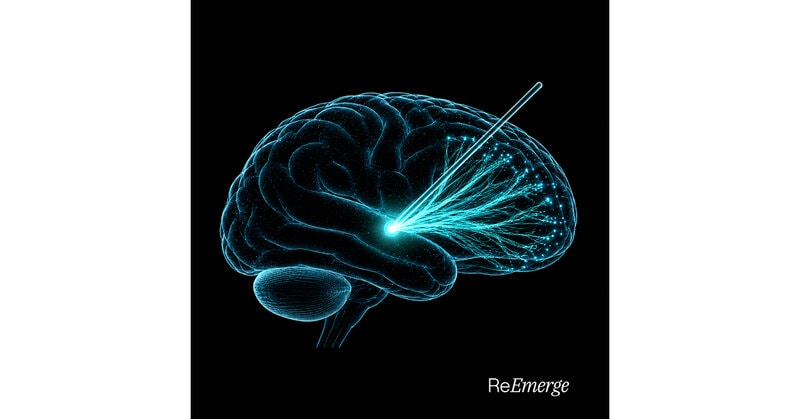
Cognitive restoration therapies are exploring ways to reactivate underperforming neural networks in people experiencing long-term cognitive impairment after brain injuries. ReEmerge’s Cognitive Network Restoration Therapy (CNRT) precisely targets networks in the central thalamus, a brain region involved in attention, arousal and executive function. Instead of helping patients compensate for lost abilities, the approach uses electrical stimulation to activate viable neural circuits with the goal of restoring cognitive function. ReEmerge plans to evaluate CNRT in a multicenter study enrolling up to 40 patients with chronic moderate-to-severe traumatic brain injury.
The approach could create a new treatment pathway for patients whose recovery has plateaued under conventional rehabilitation. ReEmerge’s $37 million Series A will support clinical testing, technology development and regulatory operations. If clinical evidence demonstrates meaningful benefits, the platform could eventually expand into additional cognitive conditions, giving ReEmerge opportunities beyond its initial TBI indication.
Image Credit: ReEmerge, Inc.
What Makes This Trend Stand Out
- Neural Circuit Reactivation
- Precision stimulation of dormant but viable brain networks creates new possibilities for therapies that restore function rather than manage impairment.
- Restorative Neurotechnology
- Implantable and targeted neuromodulation platforms are reshaping cognitive care by positioning recovery as a measurable biological intervention.
- Post-acute Brain Recovery
- Chronic injury populations with limited rehabilitation gains represent an emerging market for treatments designed around long-term neural repair.
Sectors Adopting This
- Neurotechnology
- Advanced brain stimulation systems are expanding commercial opportunities for devices that directly modulate cognition-related neural pathways.
- Rehabilitation Medicine
- Traditional recovery programs may be complemented by biologically targeted therapies that address stalled cognitive progress after injury.
- Clinical Research
- Multicenter trials for complex brain disorders are creating demand for specialized protocols, endpoints and regulatory strategies in cognitive restoration.