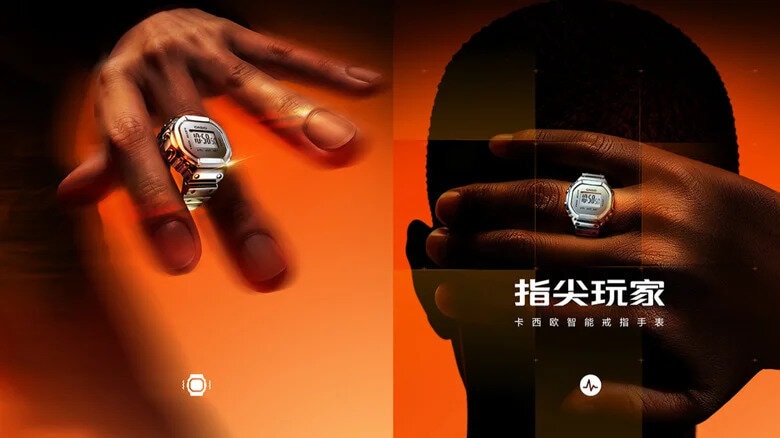
The Casio CRW-H001M-8 reimagines the company's ring watch format by integrating smartwatch health-tracking features into a miniature digital timepiece worn on the finger. The device retains a functional digital display with a clock, stopwatch and calendar while adding sensors capable of monitoring heart rate, blood oxygen levels, sleep and body temperature. It also tracks daily step counts and estimates calorie expenditure, expanding the ring beyond timekeeping.
The smart ring watch is scheduled to launch first in China at a price of approximately $294, including local taxes. Casio says the wearable delivers between four and six days of battery life on a single charge. Unlike many smart rings that use a minimalist metal band design, the model preserves the appearance of the company's classic digital watches in a compact wearable format while combining health monitoring with familiar wristwatch functions.
Image Credit: Casio
What's Driving This Trend
- Finger-based Wearables
- Miniaturized devices worn on the finger create room for new form factors that blend everyday accessories with continuous personal data capture.
- Retro Smart Devices
- Classic product aesthetics paired with modern sensors signal opportunities for nostalgic hardware that delivers contemporary digital utility.
- Compact Health Tracking
- Smaller wellness monitors make passive biometrics more accessible across daily routines without relying on full-sized smartwatches.
Who This Affects Most
- Consumer Electronics
- Hybrid wearable formats expand the category beyond phones and watches, supporting differentiated devices built around convenience and identity.
- Digital Health
- Always-on biometric sensing in jewelry-like products opens pathways for more frequent wellness insights outside clinical environments.
- Fashion Accessories
- Technology embedded in recognizable accessory styles points to connected products that function as both personal expression and data interfaces.