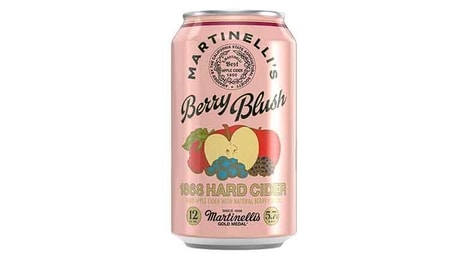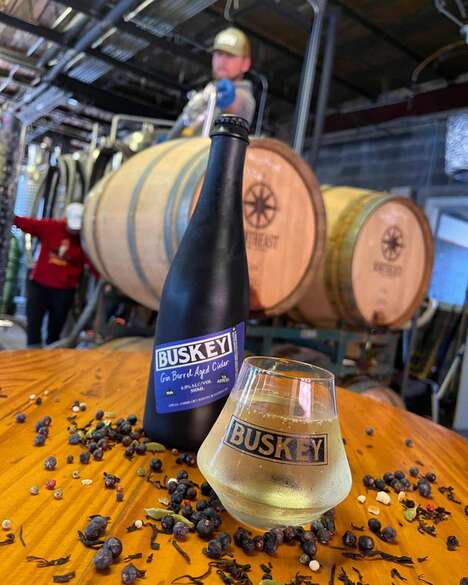
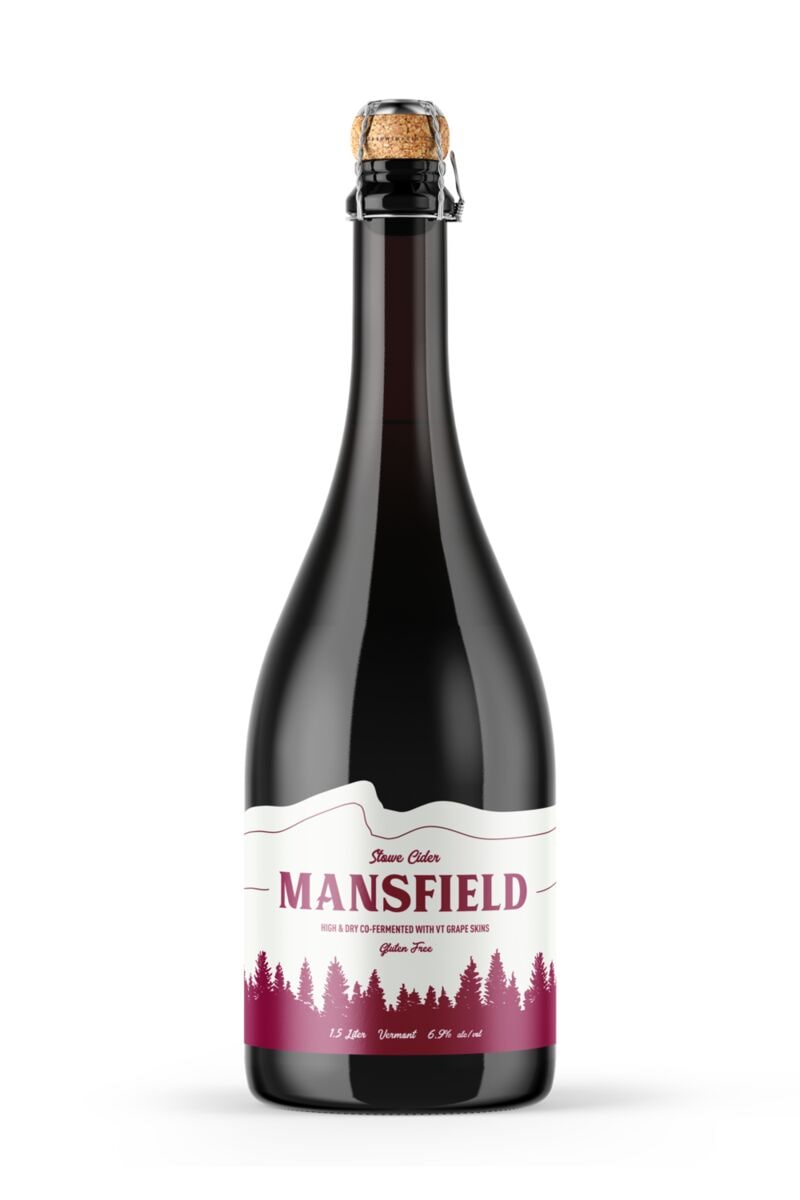
Stowe Cider, based proudly in the town of Stowe in the north of Vermont, has launched a delicious new carbonated cider that was created by blending together the very best attributes of the company's venerable ciders with a magical new ingredient in the form of grape skins.
This particular carbonated cider was created by fermenting Stowe Cider's tried and tested cider base with grape skins through a process that is akin to the brewing of classic champagne, with the end result being a complex yet easily drinkable cider.
With a dry mouthfeel and refreshingly fruity taste, this particular carbonated cider offers an alcohol percentage of 6.9 percent, making it the ideal accompaniment to a hearty holiday meal. It is available for a price of $40 for a bottle containing 1.5 liters of deliciously grapey goodness.
Image Credit: Stowe Cider
Key Themes Behind This Trend
- Grape-infused Beverages
- The creation of grape-infused carbonated ciders opens up opportunities for the creation of other grape-infused beverages.
- Co-fermentation
- The process of co-fermentation used in the creation of grape-infused carbonated ciders can be adapted for use in other alcoholic beverages.
- Limited-edition Flavors
- The popularity of limited-edition grape-infused carbonated ciders suggests that consumers are interested in trying new and unique flavor combinations in their drinks.
Where This Applies
- Cider Industry
- The cider industry has the opportunity to experiment with new flavor combinations using the process of co-fermentation.
- Wine Industry
- The wine industry can explore the creation of sparkling wine using co-fermentation with different fruits or flavors.
- Craft Beer Industry
- The craft beer industry can create new and interesting flavor combinations by experimenting with co-fermentation with fruit or other ingredients.