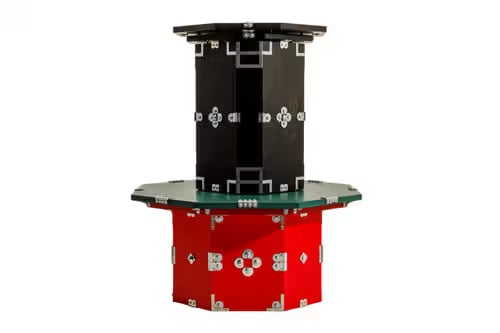
Korean designer Han Seungmin has introduced the BU Tables, a furniture series developed through references to traditional Korean architectural ornamentation and craft techniques. The collection features stacked wooden volumes assembled through exposed joinery details and layered geometric construction. Rounded tabletops rest above carved cylindrical supports, while repeated cutouts and recessed forms create shifting shadows across the surface geometry.
The tables combine dark stained wood with lighter natural finishes, producing contrast between the structural components and the carved decorative detailing visible throughout each piece. The series draws from “dancheong,” the decorative coloring and pattern system historically applied to Korean wooden architecture, alongside traditional bracket structures used in temple construction. Han adapts these references into modular furniture forms through repeated circular and rectilinear components stacked vertically beneath the tabletop surfaces.
Image Credit: Han Seungmin
Key Themes Behind This Trend
- Modular Heritage Craft
- A resurgence of modular pieces that reinterpret traditional craft techniques suggests new product families combining mass-customization with regionally sourced artisanal knowledge.
- Exposed Joinery Aesthetics
- Visible structural connections as a design feature point to opportunities for products that communicate engineering transparency and premium craftsmanship through joinery-led visual language.
- Material Contrast Layering
- Contrasting finishes and layered geometries indicate potential for collections that leverage tactile and visual contrast to create configurable, multisensory furnishings.
Where This Applies
- Furniture Manufacturing
- Precision woodworking and modular assembly methods open the door to scalable production systems blending CNC fabrication with handcrafted finishing to offer high-margin customizable products.
- Interior Architecture
- Contextual integration of ornamental structural elements could redefine spatial programming by introducing modular, load-bearing furnishings that serve both functional and decorative roles.
- Cultural Tourism
- Designs rooted in traditional ornamentation create experiential merchandising possibilities where crafted objects act as narrative touchpoints within cultural sites and themed retail environments.