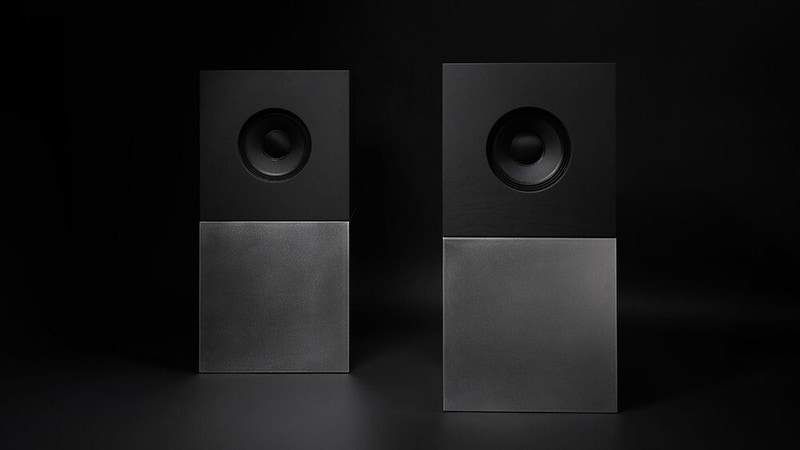
The Braque stereo system by Daniel Alm and Nocs is a minimalist audio device inspired by the geometric language of Cubism. The Braque stereo system by Daniel Alm and Nocs consists of two interconnected cube forms that house the speaker components while referencing the fragmented visual compositions of painter Georges Braque. The upper enclosure is built from plywood and contains the driver unit, while the lower base is crafted from brushed steel to create a contrasting material pairing.
Both elements are finished in black but treated differently so they interact with light in distinct ways. The steel base is hand-cut, welded, and brushed to produce a subtle patina unique to each unit, while the plywood housing receives a matte coating that emphasizes the system’s monolithic silhouette. The speaker uses a coaxial driver inside a large enclosure designed to produce balanced and natural sound reproduction.
Image Credit: Nocs
What Makes This Trend Stand Out
- Modular Sculptural Audio
- Designs combining discrete geometric modules create adaptable sound systems that blur the line between furniture and electronics, enabling novel product ecosystems.
- Material-contrast Minimalism
- Aesthetic strategies that pair warm natural woods with industrial metals produce tactile and visual differentiation that can redefine perceived value in everyday devices.
- Cubist-inspired Product Aesthetics
- Products referencing fragmented geometric art movements introduce unconventional form languages that shift consumer expectations for functional objects.
Sectors Adopting This
- Consumer Electronics
- Premium audio and lifestyle electronics are moving toward design-forward hardware where form-factor storytelling becomes a key differentiator against feature-driven competitors.
- High-end Furniture
- Bespoke furniture makers are encountering crossover opportunities as audio components are integrated into sculptural pieces, altering how living spaces are furnished and experienced.
- Acoustic Architecture
- Built environments are increasingly treating speakers as architectural elements, prompting new approaches to spatial sound integration and surface-material interplay.