Hyundai Design North America unveiled the Boulder Concept at the 2026 New York International Auto Show as an off-road-focused midsize truck study built around the brand’s first fully boxed ladder-frame platform. Finished in Liquid Titanium, the concept incorporates 37-inch mud-terrain tires, coach-style rear doors, dual safari windows, and a double-hinged tailgate.
The design follows Hyundai’s “Art of Steel” philosophy, with recessed lighting elements, exposed structural gaps, and pronounced wheel arch geometry defining the exterior. A roof rack with integrated lighting and steel webbing extends across the flat roofline, while a power-dome hood reinforces the truck’s upright proportions.
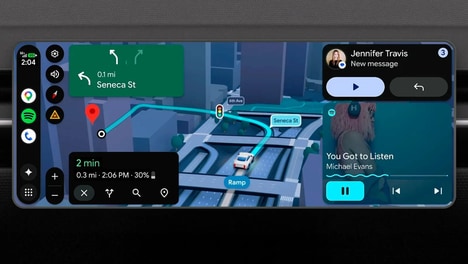
The cabin replaces a conventional instrument cluster and center touchscreen with a pillar-to-pillar head-up display positioned at the base of the windshield. Smaller dashboard-mounted screens, physical controls, grab bars, fold-out tray tables, and a modular device rail system are integrated throughout the interior. Hyundai engineered the platform to support electric, hybrid, and internal-combustion powertrains, although production specifications remain unannounced.
Image Credit: Hyundai Design North America
What Makes This Trend Stand Out
- Ladder-frame Electrification
- The development of a fully boxed ladder-frame platform designed to accept electric, hybrid, and internal-combustion powertrains suggests new modular powertrain architectures and battery integration strategies for rugged vehicles.
- Modular Cabin Ecosystems
- Pillar-to-pillar head-up displays combined with dashboard-mounted mini-screens, device rails, and fold-out tables indicate a shift toward configurable, interoperable in-cabin systems that blend physical controls with distributed digital interfaces.
- Steel-forward Rugged Aesthetics
- Exposed structural elements, pronounced wheel arches, integrated roof-rack webbing, and recessed lighting point to a design language that marries utilitarian durability with premium metalwork, creating room for novel materials and manufacturing techniques.
Sectors Adopting This
- Automotive Manufacturing
- Vehicle producers adapting production lines to support ladder-frame architectures that accommodate multiple powertrain types stand to reconfigure supply chains and assembly processes around platform versatility.
- Automotive Software and AR Displays
- Suppliers of head-up display systems and distributed cabin software could enable new human-machine interfaces that integrate navigation, vehicle status, and contextual off-road data across panoramic projection surfaces.
- Aftermarket Accessories and Off-road Equipment
- Producers of roof racks, integrated lighting, heavy-duty tires, and modular interior fittings may find demand for purpose-built components that complement factory steelwork and expedition-focused configurations.