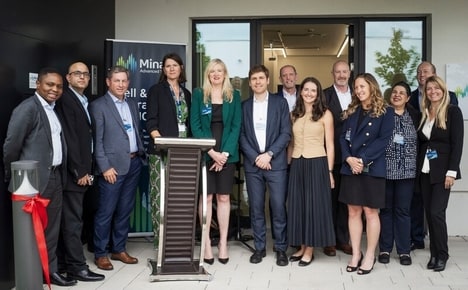
NRGene Canada and Fairville Farming Co. have established FairGene — a joint venture that has launched a black soldier fly egg production facility in Bassano, Alberta. The site has already begun operations and is supplying producers globally with eggs developed using NRGene Canada's MaxBSF genetics platform.
The black soldier fly egg facility combines Fairville's agricultural production experience with NRGene's advanced genetic capabilities to address the critical need for a consistent and reliable egg supply as the insect protein industry scales up its production of sustainable protein, oil, and frass. The MaxBSF genetics are designed to improve production economics by offering shorter production cycles, better bioconversion rates, and more consistent growth, with observed results showing up to 2.1 times more output compared to standard lines.
Image Credit: NRGene Canada, FairGene
What's Driving This Trend
- Genetically Optimized Insects
- Advanced breeding platforms are transforming insect agriculture by improving yield, growth consistency, and feed conversion efficiency for scalable alternative protein production.
- Industrial Insect Inputs
- Specialized egg supply facilities are emerging as critical infrastructure for producers seeking reliable biological inputs in high-volume insect farming systems.
- Circular Protein Production
- Black soldier fly operations are reinforcing circular economy models by converting organic inputs into protein, oil, and nutrient-rich frass for food, feed, and agriculture markets.
Who This Affects Most
- Alternative Protein
- Insect-based production systems are expanding the protein landscape with lower-footprint ingredients that can complement aquaculture, livestock, and pet nutrition supply chains.
- Agricultural Biotechnology
- Genomic tools and proprietary genetics are creating new value in farming by enhancing biological performance across emerging animal and insect production categories.
- Sustainable Agriculture
- Frass and insect-derived inputs are connecting waste valorization with soil health, positioning insect facilities as multifunctional assets within regenerative farming ecosystems.