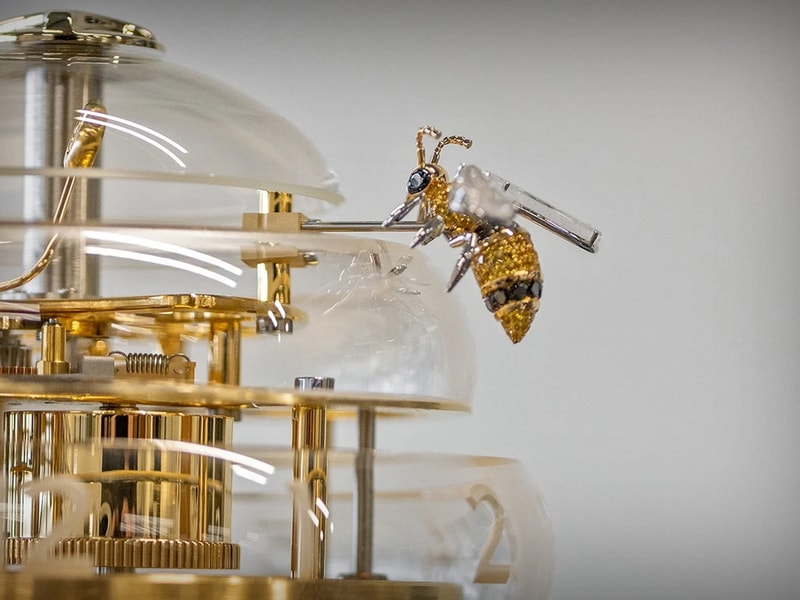
The Chopard Beehive Table Clock is a mechanical timepiece developed with L’Epée 1839, structured as a multi-tiered glass form that references a traditional beehive. The object is composed of stacked borosilicate glass segments that house a visible vertical movement, with time indicated by sculpted bees positioned across rotating rings. Two of the bees function as hands, using their stingers to mark hours and minutes, while a third indicates the chiming mode.
The clock includes a striking mechanism where the upper glass dome acts as an acoustic bell, activated by an internal hammer. The movement is manually wound through a crown at the base, with separate barrels controlling timekeeping and chiming, delivering up to eight days of autonomy. The exterior combines gilded components with hand-crafted bees made from ethical gold, gemstones, and rock crystal.
Image Credit: Chopard
What's Driving This Trend
- Transparent Mechanical Timepieces
- The prominence of stacked glass and exposed vertical movements highlights consumer appetite for visible mechanics that blend engineering with sculpture.
- Biomimetic Design Revival
- Drawing on beehive forms and sculpted insects, designers are reinterpreting natural structures to convey narrative and symbolic value in luxury objects.
- Hybrid Acoustic-visual Craftsmanship
- Combining glass-domed bells with traditional striking mechanisms signals a convergence of sound design and visual aesthetics in premium tactile products.
Who This Affects Most
- Luxury Horology
- High-end watch and clockmakers are exploring transparent architectures and artisanal materials to differentiate mechanical offerings beyond precision timekeeping.
- High-end Home Decor
- Interior luxury markets are adopting objet d'art timepieces as focal pieces that merge functionality with curated sculptural presence.
- Ethical Precious Metals and Gemstones
- The use of ethically sourced gold and gemstones in decorative components points to supply-chain provenance becoming a core value proposition for affluent buyers.