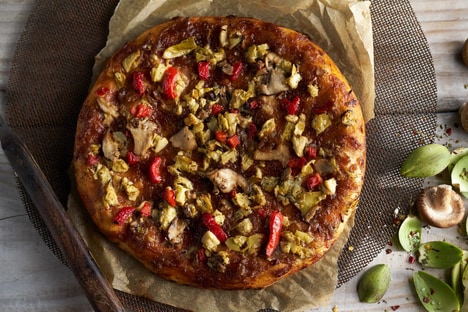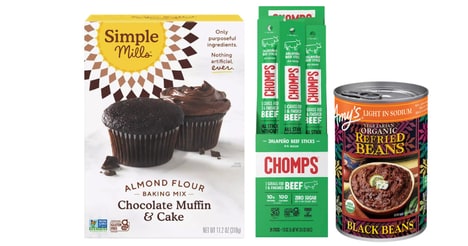
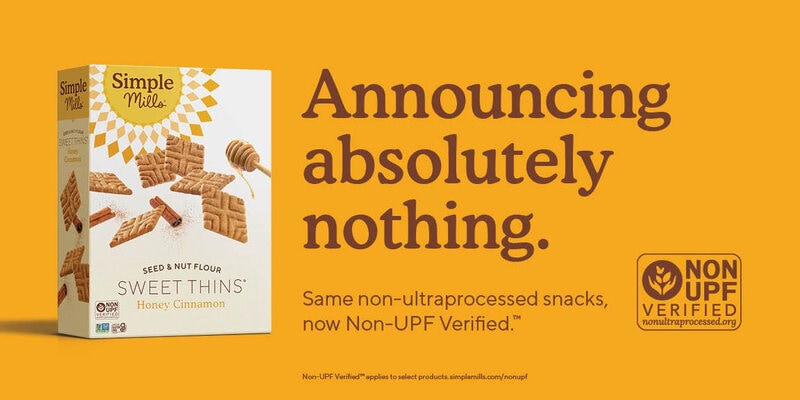
Simple Mills has launched 'Announcing Absolutely Nothing,' its national marketing campaign celebrating the brand's Non-UPF Verified status across 60% of its portfolio, a stat achieved without reformulating a single recipe. The multi-market, omnichannel campaign includes takeovers in New York's Union Square and Port Authority, large-format digital boards in Los Angeles and sky banners in the Hamptons, a red-hot summer vacation spot.
The campaign addresses a transparency gap in the food sector, with research showing that 68% of consumers actively try to avoid ultra-processed foods while 70% struggle to even identify them. Simple Mills submitted its entire product portfolio for verification, with the majority expected to be approved by the end of the year, reflecting the brand's longstanding use of minimally processed nut, seed, vegetable and legume flours.
Simple Mills shows how a brand built on unchanged formulations can turn a third party's verification into a genuine differentiator in the sector.
Image Credit: Simple Mills
What's Driving This Trend
- Non-upf Verification
- Third-party validation for minimally processed foods creates new brand differentiation as shoppers seek clearer signals around ingredient quality and processing levels.
- Transparency-led Campaigns
- Marketing built around simple claims and verified standards opens space for packaged food brands to convert consumer confusion into measurable trust.
- Unchanged Recipe Positioning
- Brands with longstanding clean formulations can use consistency as a competitive asset in categories where reformulation is often treated as innovation.
Who This Affects Most
- Packaged Snacks
- Snack makers face growing demand for recognizable ingredients, creating room for products that pair convenience with verified minimal processing.
- Food Certification
- Independent verification bodies are becoming more influential as food companies look for credible ways to substantiate health and transparency claims.
- Outdoor Advertising
- High-visibility placements in urban and leisure destinations give wellness-focused food brands a broader platform for turning technical certifications into mainstream awareness.