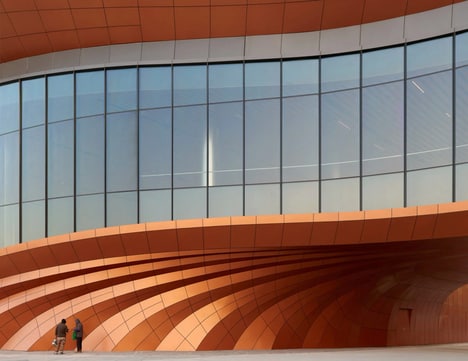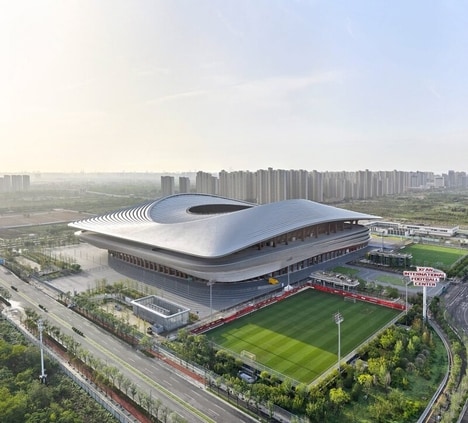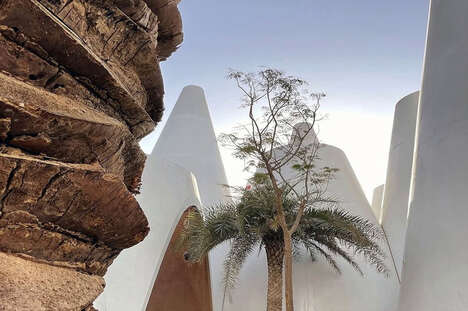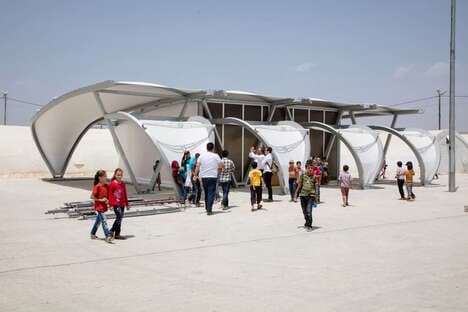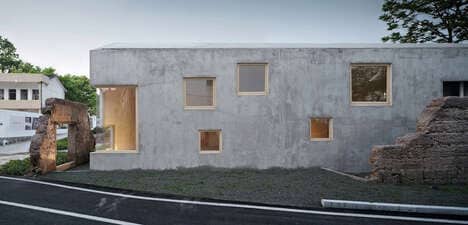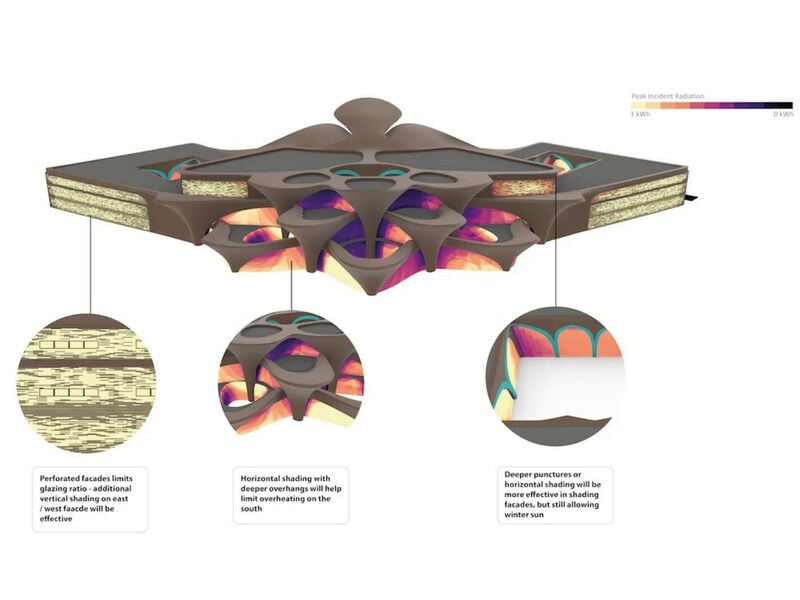
Zara Hadid Architects has designed the Alisher Navoi International Research Center which is crafted to use passive design principles to ensure that it utilizes low-energy corporations while forming comfortable conditions. The structure will have the Navoi Museum of Literature as an amenity along with a large auditorium that can seat up to 400 people, and a residential school for 200 students.
The design highlights the facades and interior which are made with bricks that are crafted from the lock kilns at Tashkent. The curved geometries of the silhouette are inspired by traditional Uzbek architecture as well. Notably, the design features various courtyards which are integrate to bring natural light to the interior and seamless ventilation.
Image Credit: Zaha Hadid Architects
What's Driving This Trend
- Passive Design Architecture
- The use of passive design principles in energy-efficient buildings can significantly reduce IWB of large corporate spaces.
- Functional Mixed-use Spaces
- Combining educational, cultural, and corporate functionalities within a single center maximizes utility while fostering a multisectoral community.
- Natural Light Solutions
- Integrating courtyards for natural light and ventilation in structures can enhance sustainable practices and improve the occupant experience.
Who This Affects Most
- Architecture and Urban Planning
- Innovating with traditional architectural elements and modern green design principles can lead to more sustainable and culturally-rich buildings.
- Education and Learning Centers
- Incorporating residential scholastic facilities within mixed-use buildings promotes an immersive and holistic educational environment.
- Art and Cultural Institutions
- Embedding museums and cultural spaces in research centers creates a multidimensional experience that enhances community engagement and learning.