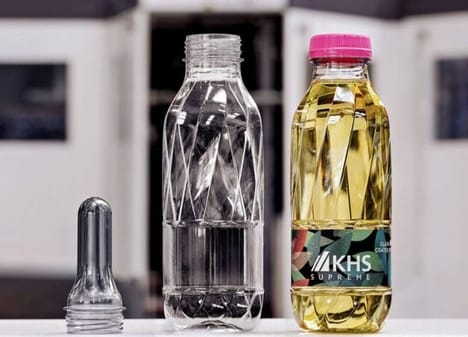
Brazilian company Agrindus is developing silver-laced plastic milk bottles that are embedded with silver nanoparticles that kill bacteria.
While there are certainly reasonable concerns over the effects of silver nanoparticles on people's health -- and indeed on the environment -- Agrindus claims that the particles in its bottles remain attached to the plastic and do not detach and get mixed up in the milk or other beverage stored in the bottle.
The most interesting outcome of using these silver-laced plastic bottles is that the milk contained within them stays good for longer periods of time. For example, Grade A pasteurized fresh whole milk packaged in these bottles can last for as many as 15 days rather than just seven days.
What Makes This Trend Stand Out
- Silver-laced Packaging
- The use of silver nanoparticles in packaging can have disruptive effects on the food and beverage industry by increasing shelf life and reducing waste.
- Nano-scale Technology
- The use of nanotechnology to create food packaging can revolutionize how retailers and consumers interact with products, creating opportunities for more efficient and sustainable supply chains.
- Antimicrobial Packaging
- The emergence of antimicrobial packaging can potentially disrupt the healthcare industry by reducing the spread of infections through contaminated surfaces.
Sectors Adopting This
- Food Packaging
- Companies in the food packaging industry can capitalize on the trend toward using silver nanoparticles by creating innovative products that enhance food safety and preservation.
- Healthcare
- The healthcare industry can benefit from the trend toward antimicrobial packaging by reducing the spread of infectious diseases in hospitals and other healthcare settings.
- Environmental Sustainability
- Industries focused on creating sustainable packaging can explore the use of nanotechnology and silver nanoparticles to create products that are both environmentally friendly and efficient.