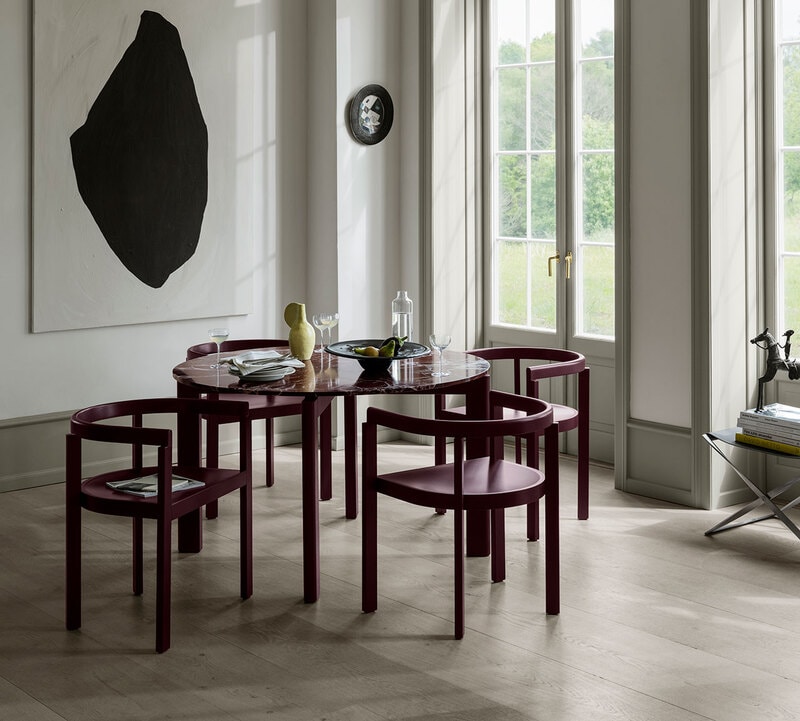
The After Series is a seating collection designed by Michael Anastassiades for Fritz Hansen, comprising chairs and stools built around a restrained structural language. The series is defined by slim metal frames paired with gently contoured plywood seats and backrests, resulting in seating that reads as light and precise rather than upholstered or bulky.
The frames are formed from slender cylindrical metal elements, finished in muted tones that align with Fritz Hansen’s material palette. Seats and backrests are produced from bent plywood shells, available with or without upholstery in textile or leather options. Connections between components are left visually legible, with joints expressed clearly rather than concealed.
Across the collection, proportions remain consistent while heights and configurations vary to accommodate dining, lounge, and counter seating. The chairs and stools share the same underlying geometry, allowing different pieces to sit cohesively within the same interior.
Image Credit: Michael Anastassiades, Fritz Hansen
Key Themes Behind This Trend
- Visual Simplicity in Design
- Clear articulation of joints and connections in minimalist designs is ushering a new aesthetic that values transparency and structural authenticity.
- Modular Seating Solutions
- The consistent geometry across varying heights and configurations in seating collections reflects a growing demand for modular furniture that adapts to diverse interior needs.
- Sustainable Material Utilization
- The use of bent plywood and slender metal frames highlights an industry trend toward using sustainable and less resource-intensive materials in furniture design.
Where This Applies
- Furniture Manufacturing
- Innovations in minimalist seating collections are redefining furniture manufacturing by emphasizing elegant structural forms over traditional bulky designs.
- Interior Design
- The minimalist seating collection trend is influencing interior design industry practices by encouraging cohesive, space-efficient layouts that prioritize form and function.
- Materials Engineering
- Advancements in materials engineering are enabling the production of lighter, yet sturdy, furniture elements, driving efficiency and sustainability in the industry.