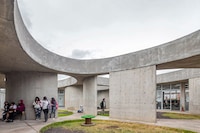
For his masters thesis, Adrian Yiu looked to repurpose a system that once drove the economy in a now poor area. The Morro da Providencia favela in Rio de Janeiro surrounds a decommissioned quarry that once provided jobs to the townspeople, but that quarry now sits defunct. Rather than letting it waste away, Adrian Yiu imagined turning it into a community center built into the deep canyon.
The project would use the quarry as a community-led cooperative, empowering the people in the area and giving them a way to earn funds through the quarry. Ultimately, the project would allow the poor people throughout the favela to have some economic self-sustenance, freeing them from what Yiu views as the economic oppression of the state.
What's Driving This Trend
- Community-led Cooperatives
- Repurposing abandoned facilities as community-led cooperatives to empower communities and foster economic self-sustenance.
- Upcycling Architecture
- Incorporating underutilized spaces to construct community centers, solving social and spatial problems.
- Sustainable Micro-enterprises
- Creating micro-enterprises using sustainable practices and community resources to empower the poor and drive economic development.
Who This Affects Most
- Architecture
- Opportunities for architects to upcycle and revitalize underutilized spaces into community centers.
- Social Impact
- Creating sustainable and impactful social solutions by empowering poor communities through locally-led initiatives.
- Sustainable Economic Development
- Disrupting traditional economic structures through community-led micro-enterprises that use sustainable practices and local resources.