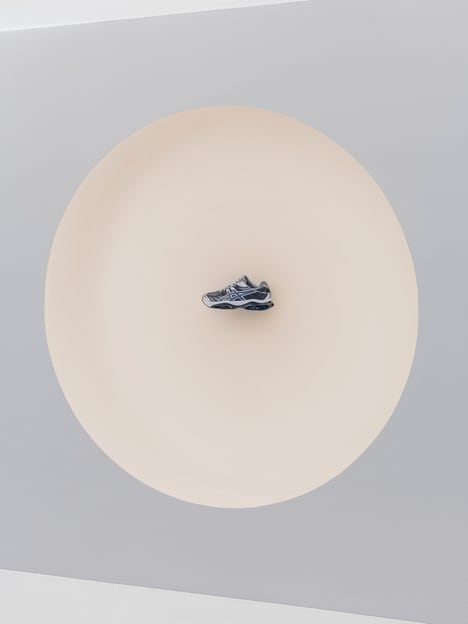
The Adidas Adizero Adios Pro Evo 3 is a marathon racing shoe weighing just 97 grams, making it the brand’s lightest performance model to date. The shoe debuted at the 2026 London Marathon, where athletes including Sabastian Sawe and Yomif Kejelcha wore it during record-breaking performances. Its sub-100-gram weight places it below common objects like a small apple, marking a shift in how racing footwear is engineered for elite competition.
The design introduces an ENERGYRIM carbon-integrated structure that reworks how the plate and foam interact, improving propulsion and efficiency. It uses a new Lightstrike Pro Evo foam compound that is significantly lighter than previous versions, alongside a thin upper and reduced outsole construction. The shoe is approximately 30% lighter than its predecessor and improves running economy by around 1.6 percent through its material and structural changes.
Image Credit: adidas
What Makes This Trend Stand Out
- Featherweight Performance Footwear
- Sub-100g racing products that redefine performance-to-weight ratios, lowering physiological energy costs for elite runners.
- Integrated Carbon-energy Structures
- ENERGYRIM-style carbon-integrated plate-and-foam architectures that reconfigure force transfer to amplify propulsion efficiency without added mass.
- Ultra-light Foam Materials
- Lightstrike Pro Evo–grade low-density foams that prioritize elastic return over bulk, enabling equivalent cushioning at a fraction of traditional weight.
Sectors Adopting This
- Competitive Athletics
- Elite racing contexts where single-digit percentage improvements in running economy can alter podium outcomes and athlete training paradigms.
- Sports Footwear Manufacturing
- Footwear production sectors facing shifts toward micro-engineered assemblies, thin-form uppers, and reduced-outsole processes that challenge conventional scale and quality control.
- Materials Science and Polymer Development
- Polymer and composite R&D aimed at low-density elastomers and carbon-composite integration that balance rebound, durability, and manufacturability.