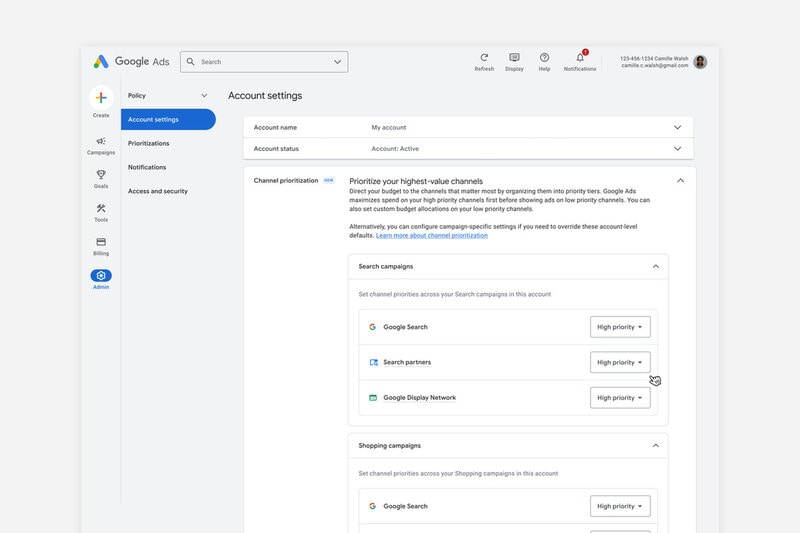
Google Ads is rolling out channel prioritization and budget allocation controls that let marketers rank ad networks and direct campaign spending to preferred inventory first. The update offers a middle ground between broad distribution and opt-outs, allowing advertisers to keep secondary placements active without letting them absorb the same share of spend.
A low-priority channel can now have its own spending ceiling as a percentage of the daily budget. These controls are rolling out globally over the next few months, including for Search and Performance Max. Search campaigns using the Google Display Network will need a Low priority setting with a 50% allocation by February 2027 to preserve the current setup.
A percentage cap on low-priority inventory turns partner and display placements into measured tests rather than binary on-or-off choices. That gives advertisers tighter guardrails around automated buying while keeping more Google inventory in play within a single campaign.
Image Credit: Google
Key Themes Behind This Trend
- Priority-based Ad Allocation
- Granular ranking of media channels creates room for bidding systems that balance automation with advertiser-defined inventory preferences.
- Budget-capped Inventory Testing
- Percentage-based spend ceilings make lower-priority placements more measurable, supporting experimentation without full campaign exclusion.
- Guardrailed Ad Automation
- Greater control over automated buying signals a shift toward platforms that preserve scale while reducing unmanaged spend exposure.
Where This Applies
- Digital Advertising
- Media-buying platforms can differentiate through controls that let marketers shape automated distribution across premium and secondary inventory.
- Marketing Technology
- Campaign management tools gain relevance as brands seek clearer budget governance across increasingly automated ad ecosystems.
- E-commerce
- Retail advertisers benefit from tighter channel prioritization as performance budgets require more precise allocation across search, display, and partner placements.