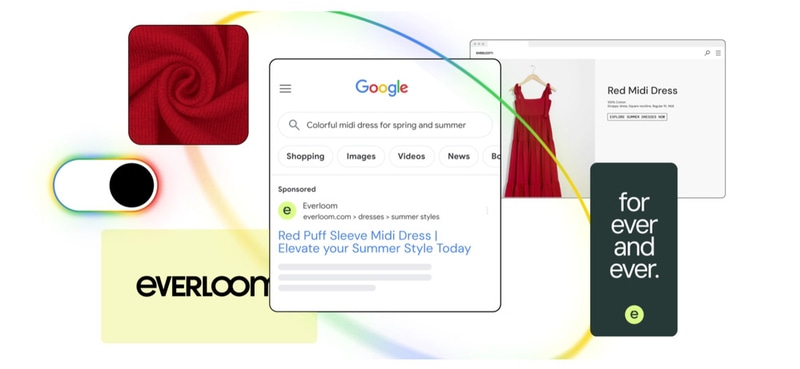
Google introduced 'AI Max' for Search campaigns, a capability that shifts ad targeting from short keywords to conversational queries, featuring AI systems that interpret context and match ads to longer, sentence-style searches. Dan Taylor, Google’s Vice President, Global Ads, discussed the rollout and its impact on how users discover brands and how results render.
The feature pairs language models with automation tools such as Google Ads Advisor and Analytics Advisor to suggest optimizations and, with approval, apply updates; Google said these systems helped reduce irrelevant ads by around 40%. Campaigns now require richer asset inputs—detailed product descriptions, FAQs and compatible-item lists—to help models understand offerings and surface relevant ads.
For marketers, AI Max reorients work toward strategic briefs and creative direction while routine bidding and keyword tweaks are automated; that can raise click quality and reduce bounce rates. The change reflects a broader trend toward intent-driven search where context and rich content matter more than static keyword lists.
Image Credit: Google
What Makes This Trend Stand Out
- Conversational Query Targeting
- Shifts toward conversational query targeting create potential to match ads to nuanced intent across long-form searches, disrupting keyword-bidding economics.
- Contextual Ad Matching
- Pairing language models with automation reduced irrelevant ads by around 40%, shifting relevance assessment from keyword overlap to semantic understanding and upending legacy auction signals.
- Creative-first Campaigns
- Requirements for richer asset inputs reframe campaign structures around detailed product narratives and FAQs, challenging traditional roles that focused on volume-based keyword lists.
Sectors Adopting This
- Digital Advertising Platforms
- Adtech platforms face pressure to embed LLM-driven intent signals and automated optimization, moving platform differentiation toward model quality and data partnerships.
- E-commerce Marketplaces
- Marketplaces with structured product data and compatible-item lists stand to change ad placement dynamics by surfacing higher-intent matches that bypass keyword-dependent discovery.
- Marketing Analytics and AI Tools
- Analytics providers that combine creative assets, query context, and performance data could supplant manual reporting with predictive models centered on semantic intent.