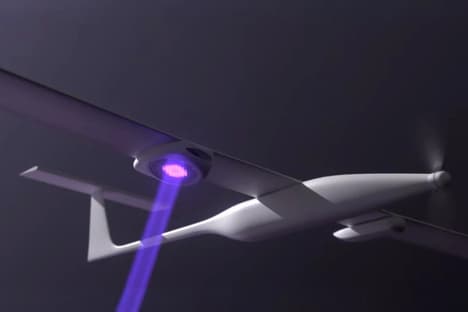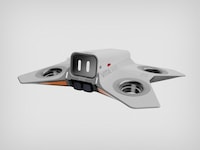

Researchers at the Civil Aviation University of China developed a lightweight drone receiver designed to harvest energy from a ground-based laser. The system combines a perovskite laser cell with a thermoelectric generator to convert both laser energy and heat into onboard electricity.
The design incorporates nanocrystals that act as a thermal barrier, helping limit heat transfer as the receiver warms during operation. Researchers mounted the unit beneath the wing of a stationary drone and added air channels to improve cooling, while propeller airflow helped lower temperatures during testing. The receiver converted 38.49% of incoming laser energy into electricity and generated enough power to spin the drone’s propeller.
The next step is outdoor flight testing to evaluate performance over distance and at altitude. The research advances efforts to make laser-based airborne charging more practical for longer-duration drone operations.
Image Credit: Civil Aviation University of China
What Makes This Trend Stand Out
- Laser-powered Drones
- Ground-to-air energy transfer could extend drone endurance by reducing dependence on onboard batteries and enabling longer missions.
- Hybrid Energy Harvesting
- Combining photovoltaic conversion with thermoelectric generation creates more efficient power systems that capture both directed energy and waste heat.
- Thermal-managed Perovskites
- Nanocrystal barriers and airflow cooling point to more durable perovskite devices suited for high-intensity energy applications.
Sectors Adopting This
- Commercial Aviation
- Laser-based charging systems may support lighter unmanned aircraft platforms for inspection, logistics, and surveillance operations.
- Drone Technology
- Extended airborne power access introduces new possibilities for persistent flight, remote monitoring, and reduced downtime between deployments.
- Renewable Energy
- Advanced energy conversion materials can broaden the role of directed light and heat recovery in next-generation power infrastructure.