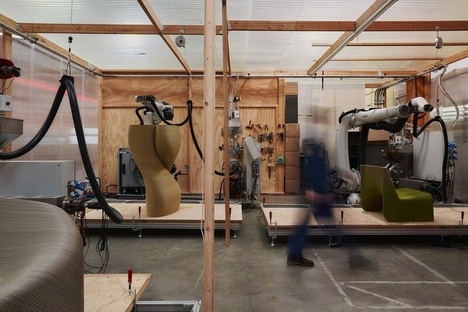

This rock installation aims to show the potential capabilities of 3D-printing in architecture. Showcased at the Chicago Architecture Biennial, the rock pile is held together only by string, formed entirely by a robotic arm.
The giant rock formation is 13 feet high and made up of loose recyclable "rocks," made from heated and expanded crushed glass. A 3D-printer was implanted with an algorithm so that it would strategically wind the string in a pattern to hold the stones together. The string, made from recycled textiles, measures almost five miles long.
This structure would have been a painstakingly time-consuming and difficult process for humans. However, with a 3D-printer, this recyclable tower could be produced for any building, structure or park easily and efficiently.
Why This Trend Is Growing
- Sustainable 3D Printing
- The use of recycled materials and algorithms in the 3D printing process to create sustainable structures like the rock installation.
- Robotic Architecture
- The use of robotics in the architectural industry to create efficient building processes, like the robotic arm used to create the installation.
- Artificial Intelligence in Construction
- The use of AI algorithms to program robotic systems in construction projects, increasing efficiency and reducing costs.
Industries Being Reshaped
- Construction
- Incorporating 3D printing technology to create sustainable, efficient building processes and structures like the rock installation for buildings, parks, and public spaces.
- Architecture
- Exploring new materials and technology, such as 3D printing and robotics, to create innovative, sustainable structures and designs like the rock installation.
- Waste Management
- The repurposing of waste materials, such as crushed glass, and recycling textiles, can create innovative and sustainable building materials for structures made through 3D printing processes.