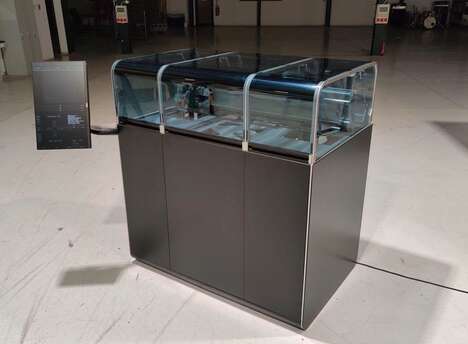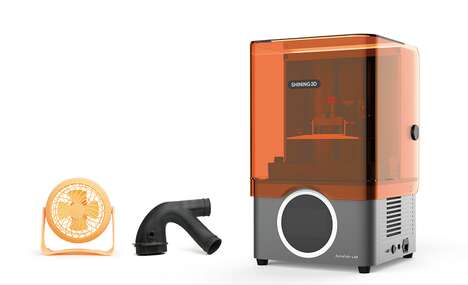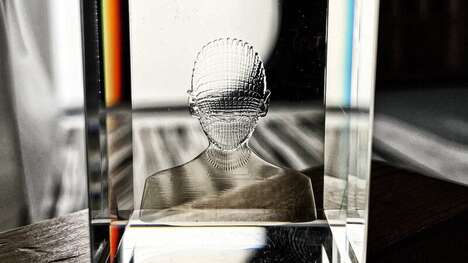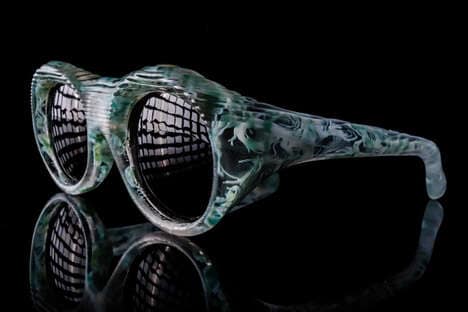
3D printing has reached another milestone in innovative technology with scientists' new ability to print 3D images in glass. The German research team led by Bastian E. Rapp at 'KIT' was funded through the German Federal Ministry for Education and Research who prioritize "the development of innovative materials for industry and society."
Up until this innovation, 3D printing included capabilities like printing on ceramics, metals, and plastics. With 3D glass printing as a goal for researchers, it did not seem like a feasible feat until the development of a new method which involves mixing nanoparticles of quartz glass with a tiny amount of liquid polymer, and curing certain parts under an ultraviolet light. This method lets some points harden, while other points are liquid, allowing the maker to build the layers of the shape.
The ability to create quick, customizable, and specific glass creations will allow for breakthroughs in the field of optics. Eye wear, computers, and medical equipment could soon be created at a more efficient rate with this new innovation.
Key Themes Behind This Trend
- 3D Glass Printing
- The development of 3D glass printing allows for the creation of quick, customizable, and specific glass creations which could revolutionize the optics industry.
- Nanoparticle Infused Materials
- The ability to mix nanoparticles of quartz glass with a variety of materials to create new 3D printed products.
- Optics Innovation
- Breakthroughs in the field of optics could drive potential new products like more efficient medical equipment, computers, and eye wear.
Where This Applies
- Optics Industry
- The ability to 3D print glass creations at a much more efficient rate than before opens up opportunities for innovative new products in the market.
- Medical Equipment Manufacturing
- 3D glass printing allows for quick, customizable and specific parts to be made, making it an efficient process for medical equipment manufacturers.
- Computer Manufacturing
- The development of 3D glass printing could enable next-generation computer manufacturing, allowing for items to be printed at a faster, more efficient, and precise level.