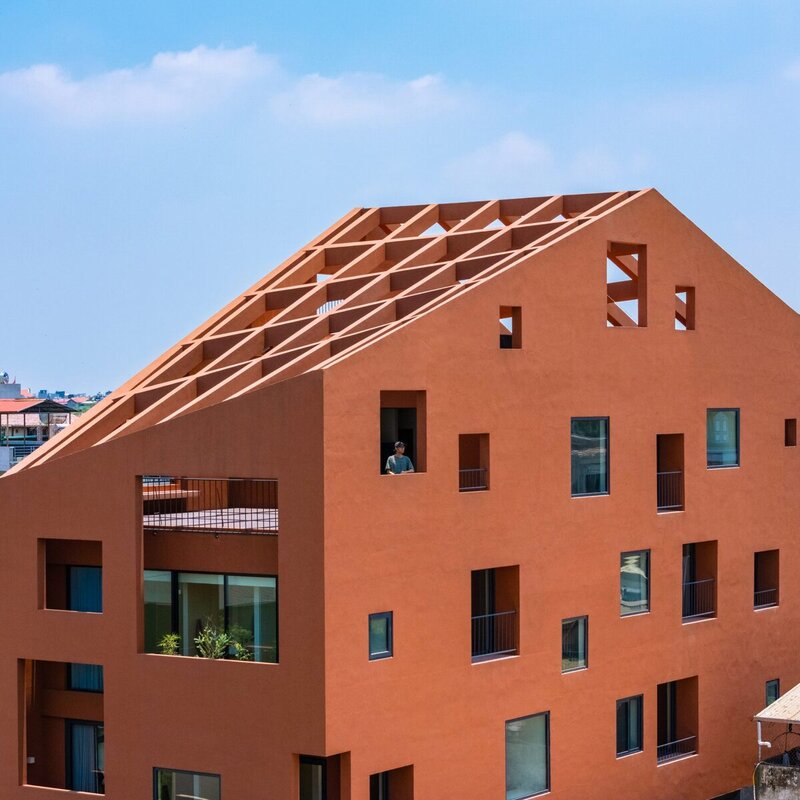
The 100 Windows house by Inrestudio is a 639-square-metre multigenerational residence in the suburbs of Hanoi designed for three households across two generations. Wrapped in a terracotta-toned double-skin facade, the home is punctuated by irregular openings that create private outdoor spaces while promoting natural ventilation. The additional depth of the envelope accommodates recessed balconies, slim terraces, built-in shelving, storage, desks, and ventilation channels integrated within the walls.
The ground floor connects the living, dining, and kitchen spaces to a basalt-paved patio and swimming pool, while the upper levels contain adaptable bedrooms and a second living, dining, and kitchen area. Many facade openings align with interior windows to frame views, while others are deliberately offset to increase privacy and provide shade. A rooftop terrace extends beneath a grid of terracotta-toned concrete beams that follows the pitch of the home's roof, completing the flexible residential layout.
Image Credit: Trieu Chien
What's Driving This Trend
- Double-skin Homes
- Layered residential facades create new value in passive cooling, privacy, and usable exterior space for dense urban housing markets.
- Climate-adaptive Facades
- Terracotta-toned envelopes with irregular openings signal demand for architectural systems that combine thermal comfort, shading, and visual identity.
- Multigenerational Flex Living
- Adaptable floorplans with separate living zones reflect emerging opportunities in homes designed for extended families and shifting household needs.
Who This Affects Most
- Residential Architecture
- Firms can differentiate through envelope-led design that turns walls into functional zones for ventilation, storage, terraces, and privacy.
- Sustainable Building Materials
- Facade materials with passive climate-control benefits are becoming central to lower-energy residential construction in warm urban regions.
- Urban Real Estate Development
- Housing projects that support privacy, shared amenities, and multigenerational living offer alternatives to conventional single-family and apartment formats.