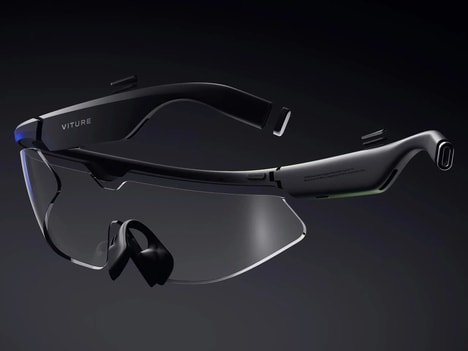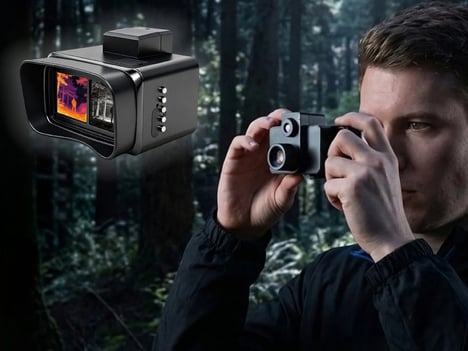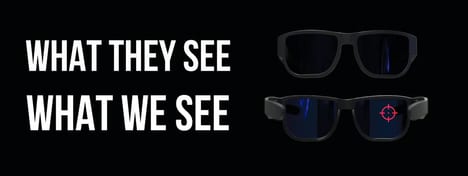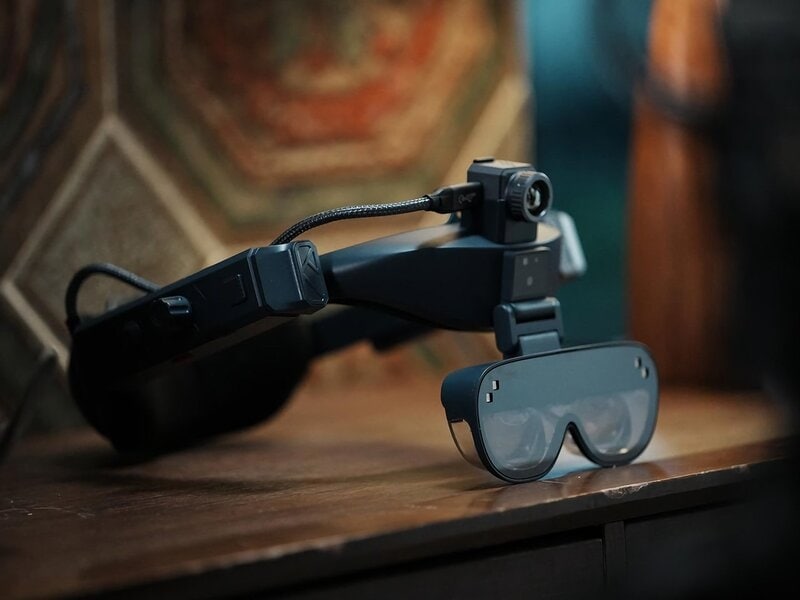
UTRACK AR glasses fuse thermal imaging, sonar, and AI to unlock visual layers invisible to the human eye. Unlike typical AR headsets, these bring real-world sensing to your field of view. A military-grade thermal sensor detects heat signatures up to 1,500 m away, while five color palettes and real-time temperature readouts add precision. Modules include a sonar fish finder—displaying underwater structure, fish, and temperatures—and an industrial endoscope for diagnosing hidden issues with an optical preview and documentation via a 48 MP POV camera.
A voice-controlled AI engine boosts functionality further, identifying fish species, plant types, and objects in real-time. Designed for field use, the glasses sport a cushioned strap tailored to global head sizes, prescription lens compatibility, magnetic day/night lens swaps, and a hot-swappable 3,300 mAh battery. OTA firmware ensures evolving capabilities without obsolescence. UTRACK redefines AR by providing sensory augmentation rather than entertainment—a powerful leap toward practical, context-aware wearable tools.
Image Credit: Utechwear
Key Themes Behind This Trend
- Sensory-augmented Wearables
- Wearable technology is evolving beyond entertainment, integrating advanced sensory data like thermal imaging and sonar to enhance real-world perception with practical applications.
- AI-driven Real-time Insight
- Artificial intelligence integrated into AR devices offers unprecedented real-time analysis, increasing the utility of wearables in identifying and interpreting environmental elements such as species and object types.
- Industry-specific AR Modules
- Tailored AR modules are enabling highly specialized functions, such as underwater exploration and industrial diagnostics, highlighting a shift towards niche applications that address specific professional needs.
Where This Applies
- Maritime Exploration Technologies
- AR-enhanced sonar capabilities are revolutionizing underwater exploration and fishing, offering detailed insights into aquatic environments and potentially transforming navigation and resource discovery.
- Industrial Diagnostics Tools
- Incorporating advanced imaging technologies like industrial endoscopes into AR glasses introduces new, non-invasive methods of conducting complex diagnostics in various industrial fields.
- Augmented Reality Optical Devices
- The development of optical devices that combine augmented reality with enhanced vision technologies marks a fundamental shift towards practical applications in sectors requiring complex visual data interpretation.