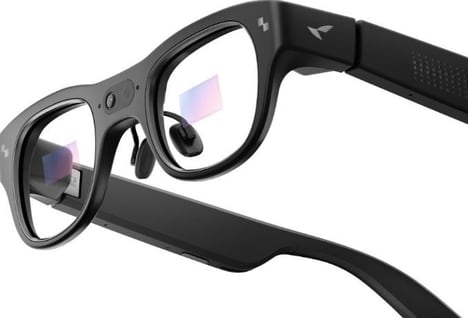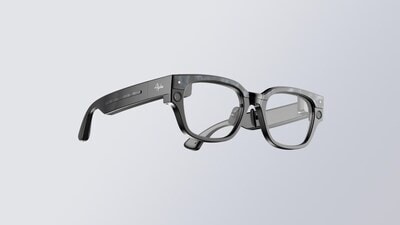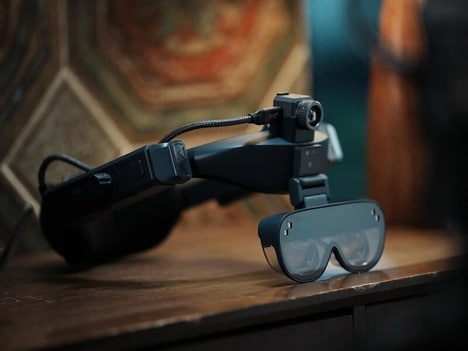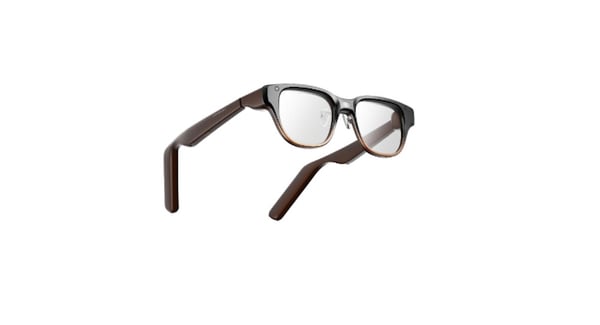
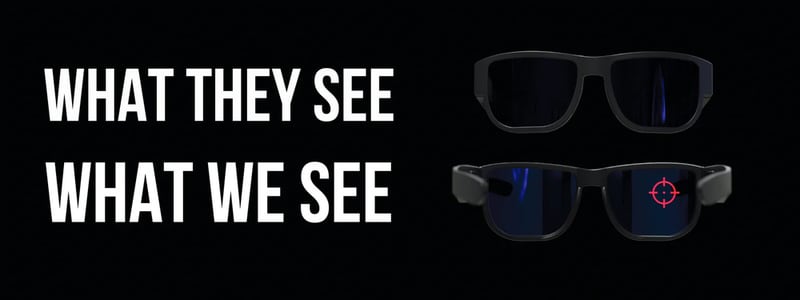
Future Optek introduced a prototype augmented-reality aiming system designed to project a digital reticle directly into transparent smart glasses, allowing shooters to aim without aligning their eyes behind a traditional optic. Developed by CEO Matthew Pohl, the RedEye platform tracks head orientation and weapon positioning to overlay aiming cues in the wearer’s natural field of view while preserving situational awareness.
The lightweight system relies on inertial measurement sensors rather than bulky camera feeds or GPS-dependent hardware, with the company emphasizing compactness and reduced visual strain compared with earlier military mixed-reality headsets. Future Optek also said the technology could integrate with remote weapon systems, drones and robotic platforms through shared positional logic between users and machines.
For operators, the glasses could improve target acquisition in awkward or confined firing positions while maintaining natural vision and reducing exposure risks tied to visible laser aiming systems. The concept reflects broader military interest in lightweight wearable AR tools for tactical awareness and human-machine teaming.
Image Credit: Future Optek
What's Driving This Trend
- Wearable Heads-up Aiming
- Lightweight AR reticles embedded in transparent glasses could replace traditional optics by enabling unencumbered aiming while preserving peripheral vision.
- Sensor-first Tracking
- Reliance on inertial measurement units instead of camera- or GPS-dependent systems opens compact, low-latency alignment solutions for constrained environments.
- Shared Positional Logic
- Interoperable positional data between human-worn AR and remote platforms can create coordinated targeting and situational-awareness layers across teams and machines.
Who This Affects Most
- Defense and Tactical Systems
- Enhanced soldier wearables that project aiming and situational cues could shift the design of small-arms accessories and engagement doctrine.
- Unmanned Systems and Robotics
- Integration of head-tracked aiming data with drones and remote weapon platforms could enable new paradigms of human-machine teaming and remote engagement fidelity.
- Wearable Optics and Consumer Eyewear
- Compact, low-strain AR aiming technology could catalyze a crossover of military-grade reticle displays into professional and recreational smart glasses.