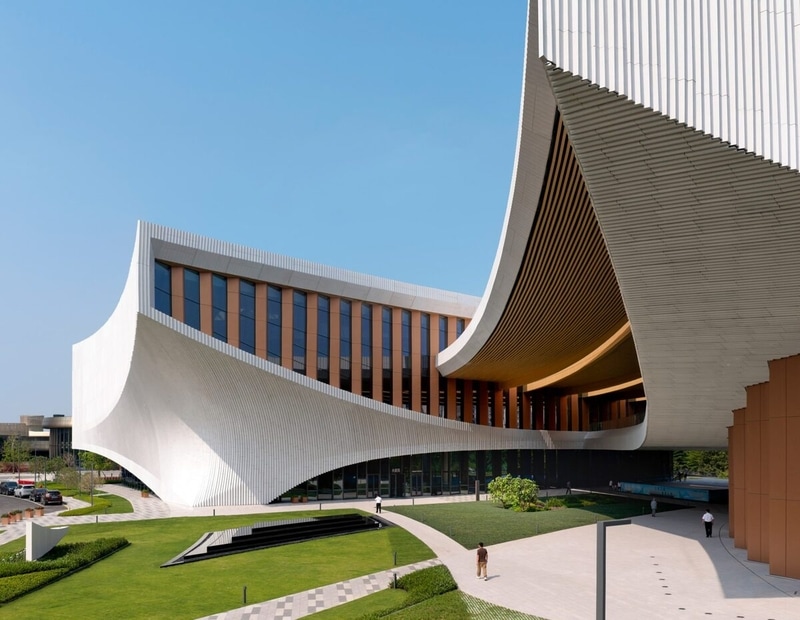
The Songshan Lake Exhibition and Performance Center is a performing arts and exhibition venue designed by ZHA in Guangdong, China. Located on the Yuehe Lake waterfront within the Greater Bay Area, the project contains a 1,200-seat Grand Theatre, an exhibition hall, and a 400-seat multifunctional hall. The complex is composed of three interconnected volumes whose sweeping forms draw inspiration from the flowing silk sleeves found in traditional Cantonese opera costumes. Light-grey aluminium cladding wraps the exterior, and a first-floor terrace links the three primary structures.
The centre sits alongside a waterfront promenade, gardens, and a public plaza designed as part of the wider redevelopment area. Curved walls continue throughout the skylit interior, where glass-reinforced gypsum surfaces define circulation spaces and stairways. Terracotta-toned finishes and timber elements appear across the public areas.
Image Credit: Virgile Simon Bertrand
Why This Trend Is Growing
- Opera-inspired Architecture
- Traditional performance aesthetics are becoming a source of distinctive building identities, creating room for culturally rooted venues that differentiate cities through recognizable design narratives.
- Culture-led Waterfronts
- Waterfront districts are increasingly blending promenades, plazas, gardens, and cultural anchors, revealing new value in public spaces that combine civic life with destination entertainment.
- Flexible Performance Hubs
- Multi-format complexes with theatres, exhibition halls, and adaptable event spaces reflect demand for venues that can support arts programming, conferences, and community gatherings year-round.
Industries Being Reshaped
- Architecture and Design
- Parametric forms, lightweight cladding, and regionally symbolic materials signal opportunities for design firms to merge advanced construction methods with local cultural storytelling.
- Performing Arts Venues
- Integrated theatre and exhibition programming expands the role of arts centers beyond single-purpose entertainment, positioning venues as diversified cultural and commercial platforms.
- Urban Redevelopment
- Large-scale cultural landmarks within landscaped public realms illustrate how redevelopment projects can use experiential infrastructure to elevate district identity and attract sustained foot traffic.