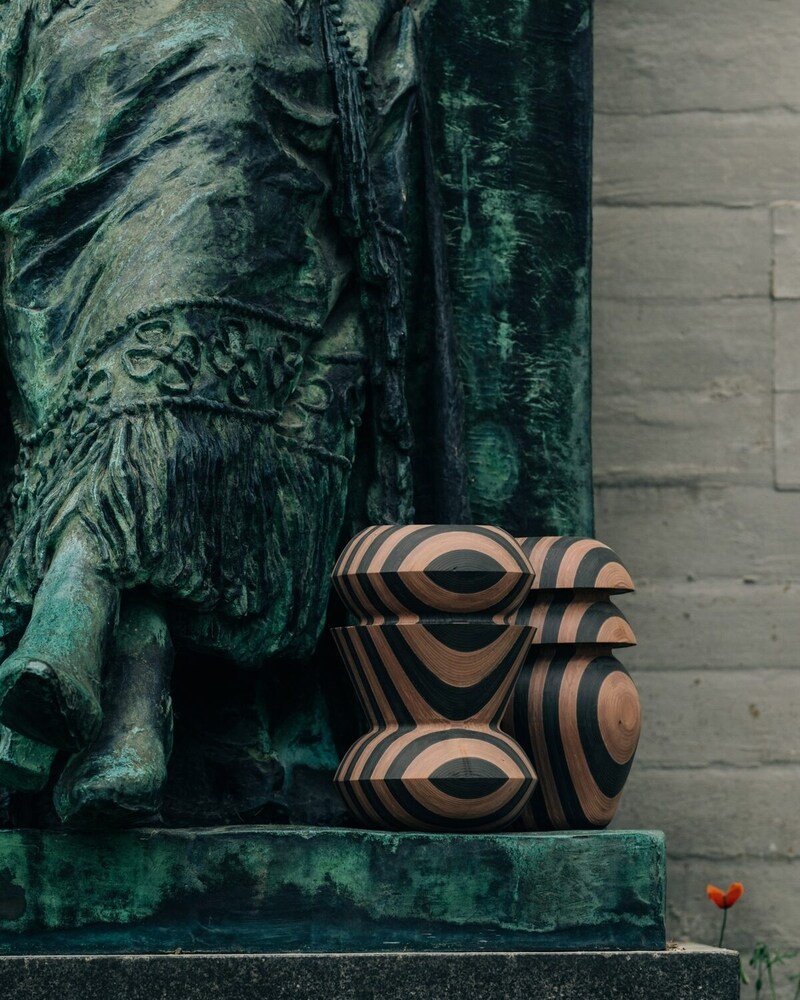
Project Materia is an exhibition presented during 3 Days of Design that showcases furniture and objects created from Matek, a recycled material developed by Danish design brand Mater. Organized by design platform Tableau and Edition Solenne, this year's exhibition shifts its focus toward contemporary circular materials, inviting nine designers to create original works using Matek sheets made from e-waste plastics combined with waste streams such as coffee shells and sawdust. The exhibition explores how designers can transform industrial byproducts into sculptural and functional objects without a prescribed brief.
The collection includes a variety of furniture and decorative pieces, from Sophie Dries' turned Stria candleholders to Lea Colombo's rounded Atom stool and Willem van Hooff's archive cabinet. Each designer responded differently to the sheet-based material, producing forms that range from geometric and architectural to more organic and sculptural.
Image Credit: Adam Katz Sinding
What Makes This Trend Stand Out
- Circular Furniture Design
- Recycled composites made from e-waste and organic byproducts are redefining premium interiors by turning waste streams into desirable sculptural and functional pieces.
- Waste-based Material Innovation
- Industrial byproducts such as coffee shells, sawdust, and discarded plastics present new possibilities for durable sheet materials that compete with virgin resources in design-led markets.
- Experimental Designer Collaborations
- Open-ended exhibitions and material-led commissions create space for designers to reveal unexpected applications, aesthetics, and commercial pathways for circular materials.
Sectors Adopting This
- Furniture
- Sustainable material adoption is reshaping furniture manufacturing as brands explore recycled composites for stools, cabinets, tables, and decorative objects.
- Interior Design
- Circular materials are expanding the palette of architects and interior designers seeking distinctive surfaces, textures, and forms with lower environmental impact.
- Waste Management
- New demand for high-value recycled inputs links waste processors with design brands, creating opportunities to transform low-grade refuse into premium material supply chains.