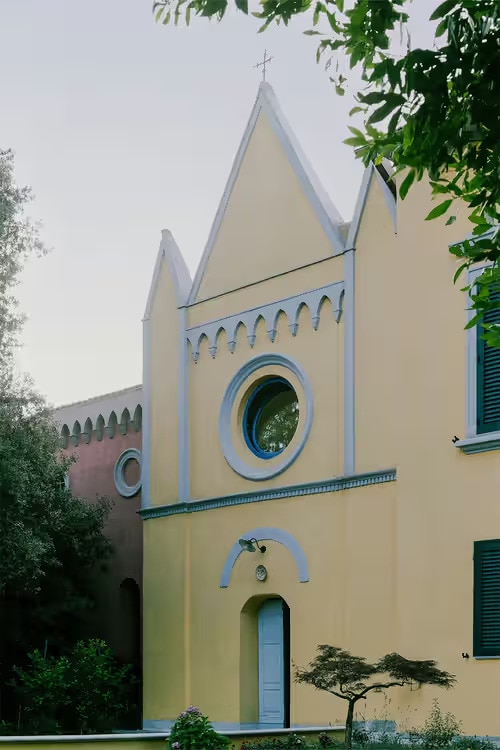
The Pailunga Tuscan Chapel converts a deconsecrated Tuscan chapel into a combined residence and creative workspace that preserves historic character while introducing subtle modern interventions. The architects kept the primary volume of the nave intact and added essential living elements through minimal insertions in wood and steel.
A mezzanine provides sleeping space without disrupting the openness of the original structure, and the new layout maintains clear views toward the surrounding landscape. The preservation of the exterior keeps the building rooted in its rural setting while allowing the interior to evolve into a functional home.
A bright blue staircase offers the most noticeable contemporary gesture, drawing inspiration from remaining colour traces found inside the apse. This feature creates a vivid contrast against the chapel’s muted surfaces and signals the shift toward a more personal, lived environment. The interior uses simple materials to balance warmth with restraint, supporting daily life without overwhelming the historic envelope. The project highlights how adaptive reuse can respect heritage while creating a home shaped for modern rhythms and creative pursuits.
Image Credit: Carlotta Di Sandro
Why This Trend Is Growing
- Adaptive Reuse Design
- This design trend transforms historic structures into modern homes, merging past architecture with contemporary living needs.
- Minimalist Interior Modifications
- Subtle structural additions through minimalist insertions emphasize simplicity while maintaining historic charm.
- Color Contrasts in Heritage Sites
- Bold color contrasts within heritage spaces highlight modern interventions and signal a shift towards personalized residential environments.
Industries Being Reshaped
- Architectural Restoration
- This industry focuses on preserving historical structures while integrating modern functionalities, catering to both heritage conservation and contemporary living.
- Interior Design
- The interior design industry can create unique residential experiences by blending historical aesthetics with modern minimalism and functional enhancements.
- Creative Workspace Development
- Merging residential spaces with creative work environments offers a versatile approach to adaptive reuse within historic settings.