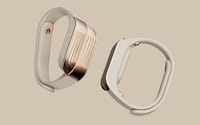
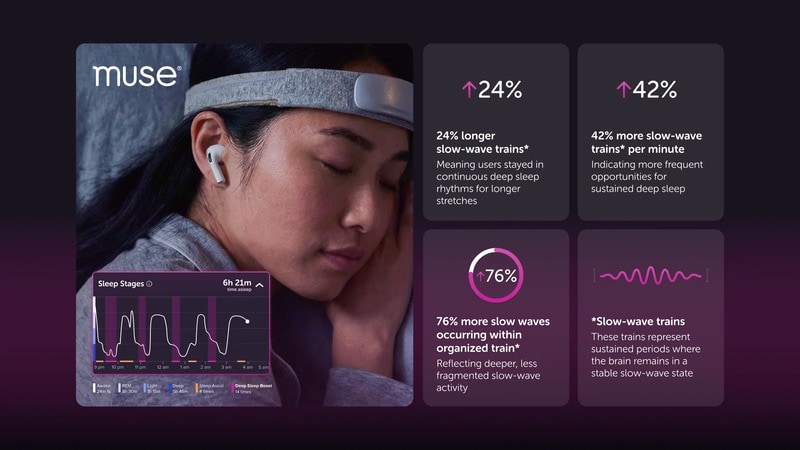
Muse Deep Sleep Boost is a new feature available to all Muse S Athena users at no added cost, turning the neurotech device into an active sleep therapy tool for guiding the brain to deeper, more restorative sleep. While there are plenty of features, tools and devices designed to tell users how well they slept, Deep Sleep Boost uses EEG-guided closed-loop neurostimulation during slow-wave sleep and delivers AI-timed pink noise cues. Described as a "smart climate system for your brain," Deep Sleep Boost doesn't just recognize sleep stages, but intervenes to enhance the quality of sleep in response to real brain waves in the moment.
Going forward, Muse will be launching more AI Sleep Platform features, creating a full end-to-end sleep cycle solution for users.
What's Driving This Trend
- Closed-loop Neurostimulation
- Real-time feedback systems that monitor brain activity and deliver tailored stimuli create opportunities to shift products from passive tracking to therapeutic intervention models.
- Eeg-guided AI Timing
- Leveraging AI to synchronize interventions with endogenous neural rhythms opens possibilities for precision-targeted noninvasive neuromodulation across cognitive and restorative applications.
- End-to-end AI Sleep Platforms
- Integrated ecosystems that combine sensing, adaptive stimulation, and personalized analytics present potential to redefine consumer expectations for continuous, outcome-focused sleep solutions.
Who This Affects Most
- Consumer Wearables
- Devices that evolve from data collectors into closed-loop therapeutic tools could disrupt conventional product lifecycles and subscription monetization strategies.
- Sleep Therapy Services
- Clinical and at-home sleep care offerings may be transformed by scalable AI-driven interventions that emulate clinician timing and personalization at lower cost.
- Smart Home Healthcare
- Ambient systems that coordinate environmental controls with neuro-responsive cues have the potential to blur boundaries between medical devices and lifestyle technology.