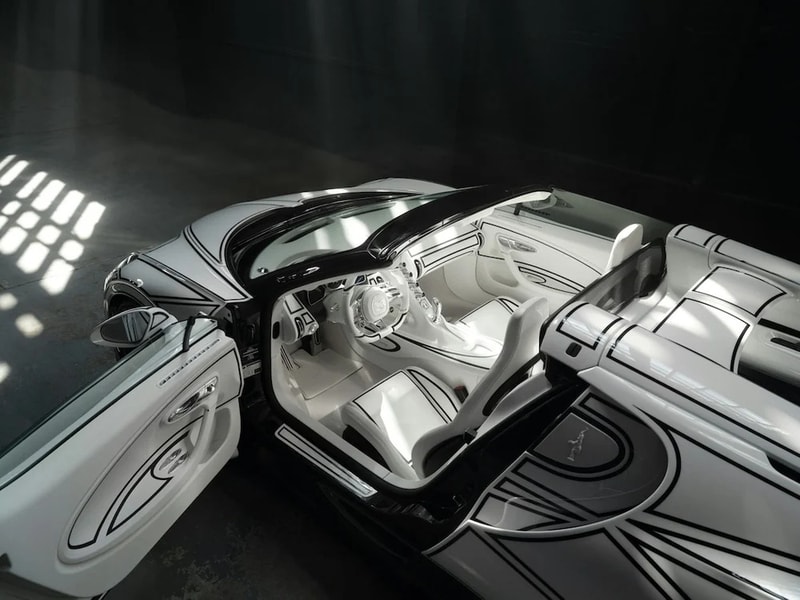
The Bugatti W16 Mistral Blanc Éternel was created through Bugatti's Sur Mesure personalization program in collaboration with Berlin's Königliche Porzellan-Manufaktur (KPM). The one-off roadster integrates handcrafted porcelain into the fuel filler cap, oil cap, engine cover, EB badges, center console, speaker grilles, and door trim. Each ceramic component carries KPM's royal scepter hallmark and required oversized production before kiln firing to account for the material's shrinkage during manufacturing. The exterior pairs a porcelain white finish with hand-painted black lines that trace the vehicle's digital surface geometry.
The cabin combines white leather upholstery with black accents to contrast the porcelain details throughout the interior. The exterior graphics reference the underlying NURBS modeling used during the vehicle's design, creating a wireframe-inspired appearance across the bodywork. The power comes from Bugatti's quad-turbocharged 8.0-liter W16 engine producing 1,578 horsepower
Image Credit: Bugatti
What's Driving This Trend
- Porcelain Automotive Detailing
- Handcrafted ceramic components in performance vehicles signal a new tier of material experimentation where heritage craftsmanship becomes a differentiating feature in ultra-luxury mobility.
- Digital Geometry Aesthetics
- Wireframe-inspired exterior graphics translate design software language into visible product storytelling, creating space for computational aesthetics to shape premium customization.
- Heritage Craft Collaborations
- Partnerships between elite automakers and legacy artisanship houses are redefining collectible products through limited-edition objects that blend engineering prestige with cultural provenance.
Who This Affects Most
- Luxury Automotive
- Ultra-high-end vehicle makers are expanding personalization beyond paint and upholstery into bespoke material integration, strengthening exclusivity through one-off manufacturing complexity.
- Porcelain Manufacturing
- Traditional ceramic producers are gaining relevance in advanced luxury applications as precision-fired materials move from decorative objects into engineered brand experiences.
- Automotive Design
- Surface modeling, hand-painted graphics, and tactile material cues are converging into a design language where digital development processes become part of the final aesthetic.