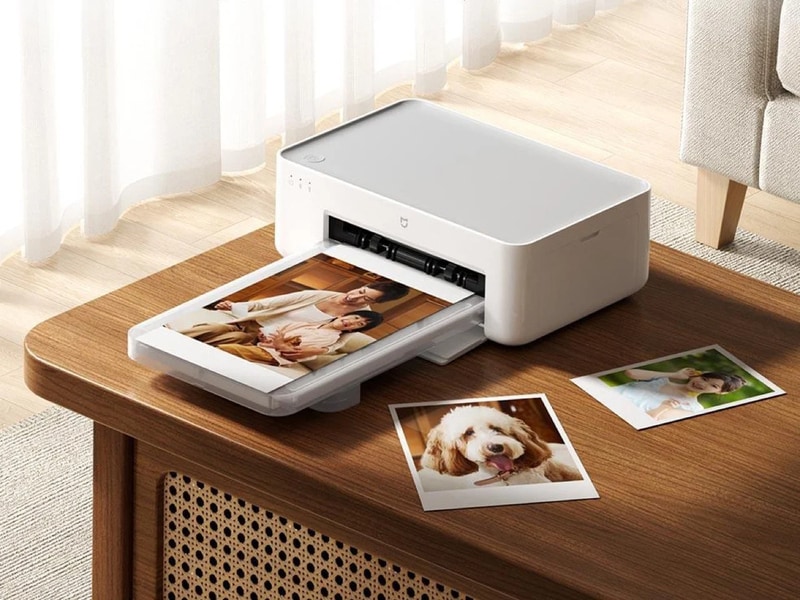
The Xiaomi Mijia Desktop Photo Printer 2 is a compact dye-sublimation photo printer that produces 4-inch and 6-inch prints from smartphones, tablets and computers through a Bluetooth connection. The printer uses a four-colour dye-sublimation process and launched on Xiaomi's Youpin crowdfunding platform for 699 yuan ahead of a planned 799 yuan retail price. The companion Mi Home app provides printing templates, AR photo playback, ID photo generation and LUT colour filters. Xiaomi also estimates per-print costs as low as 0.99 yuan when using compatible 4-inch paper packs purchased in larger quantities.
The printer is designed to operate without a Wi-Fi connection, making it suitable for portable photo printing across multiple devices. The consumables lineup includes both 4-inch and 6-inch paper options, with larger-format prints available at a higher per-sheet cost. The hardware enters a category traditionally led by dye-sublimation photo printers that rely on ongoing paper and ribbon sales.
Image Credit: Xiaomi
What's Driving This Trend
- Offline Photo Printing
- Bluetooth-enabled printers create a market for portable image output that works outside Wi-Fi environments, expanding use cases for events, travel, education and small retail settings.
- App-enhanced Printing
- Companion apps with templates, AR playback, ID photo tools and color filters turn basic printing hardware into a software-led personalization platform.
- Low-cost Consumable Models
- Affordable per-print pricing tied to paper and ribbon packs signals recurring revenue potential through accessible hardware and high-frequency consumable purchasing.
Who This Affects Most
- Consumer Electronics
- Compact dye-sublimation devices reflect a shift toward smartphone-connected accessories that blend physical keepsakes with mobile-first convenience.
- Photography Services
- Instant desktop printing introduces lower-cost alternatives to traditional photo kiosks, especially for casual portraits, ID photos and small-format memory products.
- Mobile Apps
- Photo-editing and home-device ecosystems gain new relevance when digital filters, layouts and augmented playback features connect directly to physical print output.