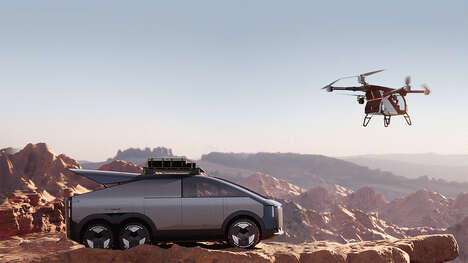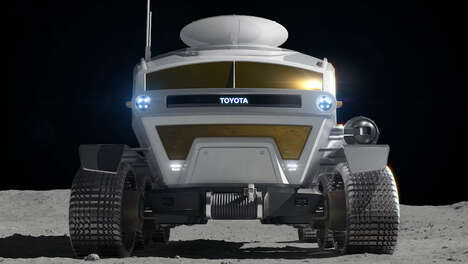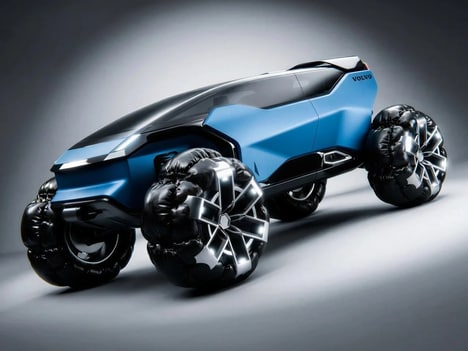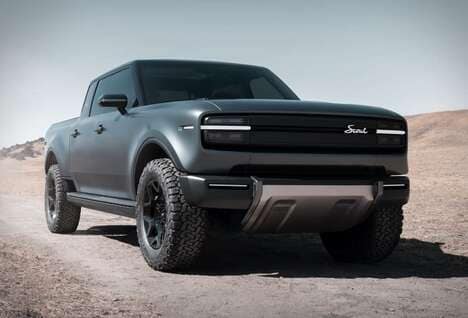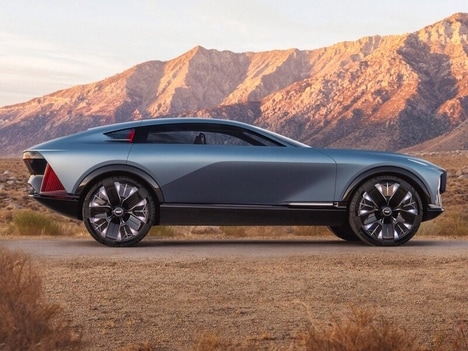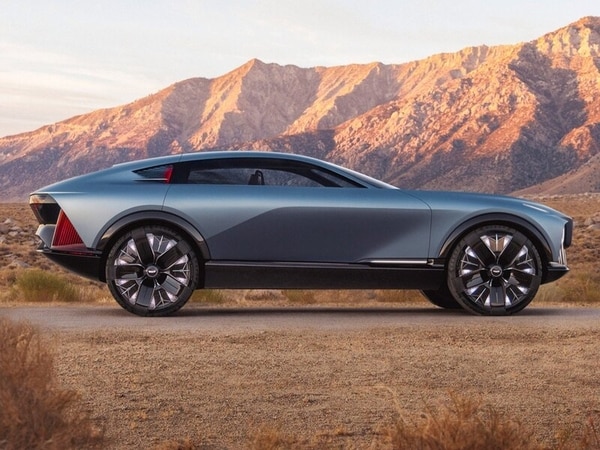
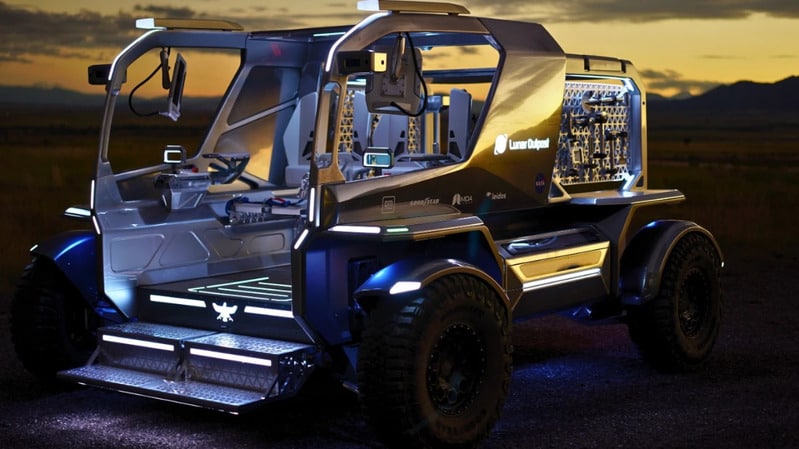
The Eagle is being developed by the brand with the NASA Artemis V mission in mind to prioritize seamless operations for astronauts. The lunar rover is engineered with battery technology that's rated to serve for 10 years and would support a 19,000 mile lifetime functionality, which would support a top speed of 15mph and an average speed of 9mph. The vehicle would be incorporated with off-road driving technology sources from the GMC e-4x4 to more easily handle dust, sand, pebbles and a variety of other lunar surface conditions.
The Eagle would boast four individually powered wheels that could also be steered indecently, which would enable crab walking and even zero-point turning.
Image Credit: General Motors
Why This Trend Is Growing
- Lunar Rover Autonomy
- The development of autonomous lunar rovers with advanced maneuverability features like crab walking and zero-point turning showcases the potential for unmanned spacecraft to explore extraterrestrial terrains with unprecedented precision.
- Long-life Battery Solutions
- The use of battery technology rated for a 10-year lifespan without replacement highlights the need for long-lasting energy solutions in space exploration, reducing maintenance and operational costs.
- Adaptable Off-road Technologies
- Incorporating advanced off-road driving technologies from terrestrial vehicles into lunar rovers presents the opportunity to enhance mobility and resilience on diverse planetary surfaces.
Industries Being Reshaped
- Space Exploration
- Space exploration industries can benefit from innovations focusing on durable, sustainable systems designed to operate over long-term missions and extreme environmental conditions.
- Automotive Engineering
- Automotive engineering is poised to be transformed by the integration of advanced drivetrain and autonomous systems inspired by extraterrestrial applications.
- Battery Manufacturing
- The demand for high-efficiency, long-lasting batteries tailored for extreme conditions opens up vast possibilities for the battery manufacturing industry.