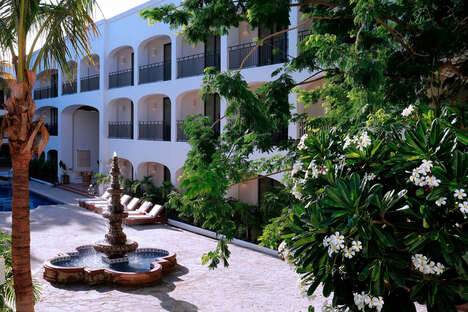
La Casona Roma Norte offers an elegant and culturally immersive stay in the heart of Mexico City’s Roma Norte district. Nestled within a thoughtfully restored 1915 mansion, this 32-room boutique hotel embodies the architectural plurality of its era, when "Colonial revival, Art Nouveau, Neoclassical, and emerging Mexican modernist styles intersected." Its soft pink façade, handcrafted tilework, and delicate Juliet balconies evoke the charm and refinement of early twentieth-century design.
The term casona, meaning “grand house,” aptly reflects the hotel’s boutique sensibility and attention to historical detail. Beyond its architectural significance, La Casona reinforces its creative heritage through curated guest experiences. Visitors are invited to explore an on-site gallery highlighting contemporary Latin American artists and partake in bespoke weekend walking tours that visit active local studios.
Blending art, history, and hospitality, La Casona Roma Norte stands as a distinguished retreat for those drawn to Mexico City’s vibrant cultural landscape.
Image Credit: La Casona Roma Norte
Key Themes Behind This Trend
- Heritage-laden Accommodations
- Hotels that emphasize historical and architectural authenticity offer guests a unique blend of nostalgia and luxury, appealing to travelers seeking culturally rich experiences.
- Art-infused Hospitality
- Integrating contemporary art exhibits within hotel spaces enhances guest engagement and supports local artists, creating a dynamic visitor experience that merges leisure with creativity.
- Experiential Staycations
- Providing curated local experiences and personalized tours transforms traditional hotel stays into immersive journeys, catering to travelers craving deeper connections with their destinations.
Where This Applies
- Boutique Hospitality
- The boutique hotel industry capitalizes on small-scale, personalized luxury experiences that differentiate it from larger hotel chains, attracting niche markets seeking intimacy and uniqueness.
- Heritage Tourism
- Preserving and promoting historical sites and architecture within the travel sector encourages cultural appreciation and fuels economic development through heritage-focused tourism.
- Art and Culture Tourism
- This industry thrives by integrating cultural activities and art exhibitions into travel itineraries, enriching tourist experiences and supporting the local creative economy.