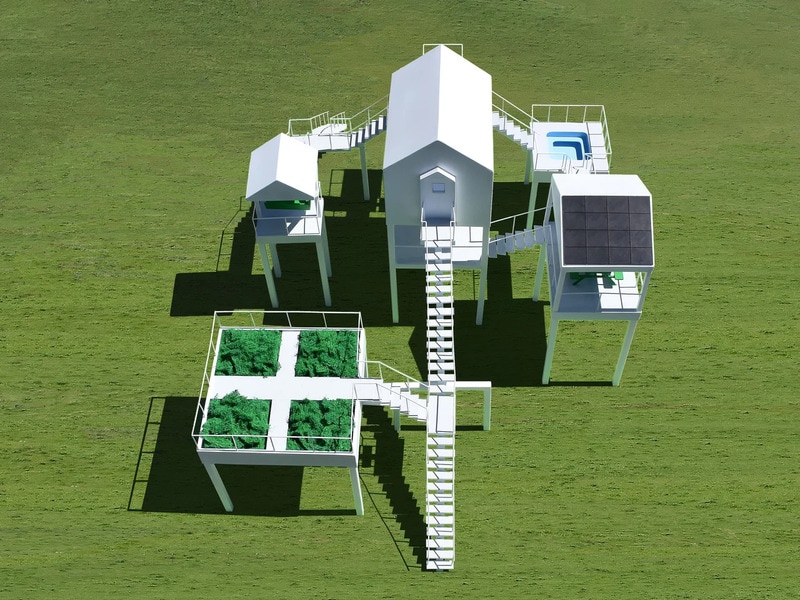
The Elevated Leisure Habitat is a residential project that places vertical movement at the core of its spatial concept, encouraging climbing between rooms as a primary mode of circulation. Instead of relegating stairs to hidden corners or transitional hallways, the design integrates climbing elements and level changes directly into central living spaces, turning daily movement into an experiential architectural feature. The result is a home where transitions between floors are as prominent as the rooms themselves.
Robust materials and tactile surfaces support both functional use and sensory engagement as inhabitants navigate the interior. Natural light is directed through vertical voids and high windows to enhance visual connection between levels. By foregrounding vertical movement, the Elevated Leisure Habitat reframes circulation as an integral design focus, blending practical access with a layered spatial experience throughout the residence.
Image Credit: Michael Jantzen
Key Themes Behind This Trend
- Vertical Living Movement
- An emphasis on vertical mobility within residential spaces is transforming how inhabitants interact with their living environments, making climbing between rooms a central design feature.
- Experiential Architecture
- Architectural designs that incorporate experiential elements into everyday living, like climbing-integrated spaces, are reshaping traditional residential layouts into interactive habitats.
- Sensory-engaged Interiors
- Homes that integrate tactile surfaces and strategic lighting to enhance sensory interaction are bringing new dimensions of engagement to residential design.
Where This Applies
- Residential Architecture
- Innovative architectural projects that prioritize vertical circulation and experiential design elements redefine standard home construction practices.
- Interior Design
- Interior design trends are shifting towards creating more interactive and engaging living spaces by embedding movement and sensory elements within home layouts.
- Sustainable Home Materials
- There is a growing demand for robust and sustainable materials that support both functional use and aesthetic appeal in modern, climbing-centric living spaces.