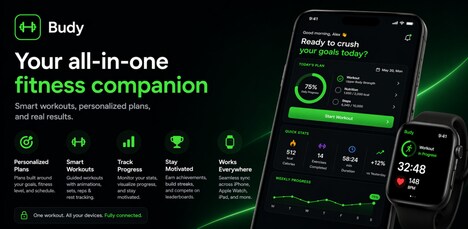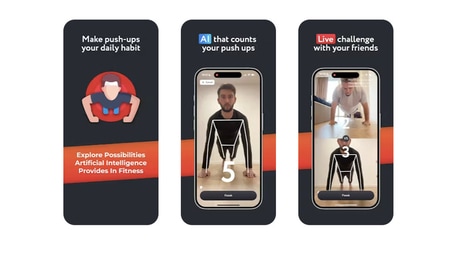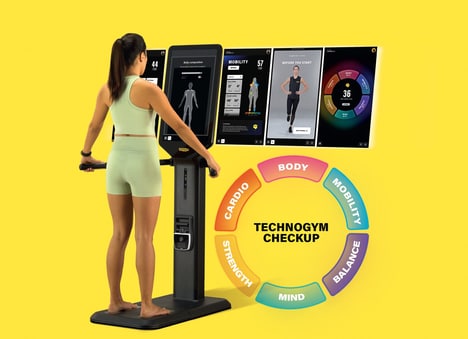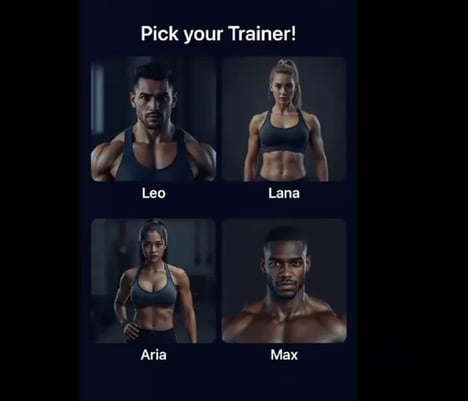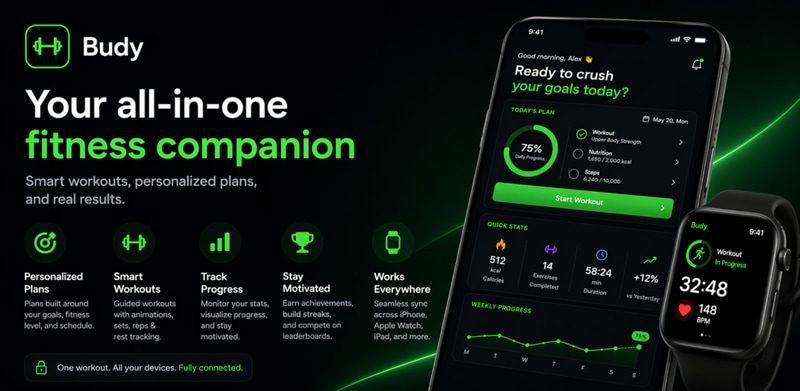
Budy has launched an artificial intelligence fitness platform for iOS and Android that generates adaptive workout plans, nutrition guidance, and voice coaching through a unified context engine.
Budy’s system continuously considers training history, performance trends, nutrition adherence, health screening data, device synchronization, and engagement patterns to inform every recommendation. When a user misses a session, changes their workout location from gym to home, reports an injury, or adjusts their schedule, the platform recalculates the program dynamically instead of forcing a restart. The adaptive workout plan system uses block-based periodization with built progression, deload logic, and regeneration options.
Another distinctive feature of Budy's innovative artificial intelligence fitness platform is its accessibility-first architecture, which includes seated and chair-based workouts, low-impact routines for seniors, movement exclusion logic, and exercise alternatives that respect physical constraints.
Image Credit: Budy
Why This Trend Is Growing
- Adaptive Fitness Personalization
- A system that dynamically recalculates training plans based on history, location, injury and adherence creates opportunities to replace static program models with continuously optimized user journeys.
- Contextual Coaching Engines
- By fusing performance trends, device data and engagement patterns into a unified context engine, coaching can shift from generic cues to situation-aware, moment-by-moment guidance.
- Accessibility-first Exercise Design
- Incorporating seated routines, low-impact options and movement exclusion logic signals a move toward inclusive fitness experiences that serve diverse mobility and health needs.
Industries Being Reshaped
- Digital Health Platforms
- Platforms that integrate adaptive plans and nutrition guidance can reshape patient engagement models by offering personalized preventative and rehabilitative care outside traditional clinical settings.
- Wearable Device Makers
- Wearables that feed continuous biometric and activity streams into adaptive algorithms enable a tighter feedback loop between sensor data and individualized workout prescriptions.
- Senior Care and Rehabilitation Services
- Services focused on aging and recovery stand to benefit from low-impact, adaptive programming that better addresses chronic conditions, mobility limitations and progressive therapy goals.