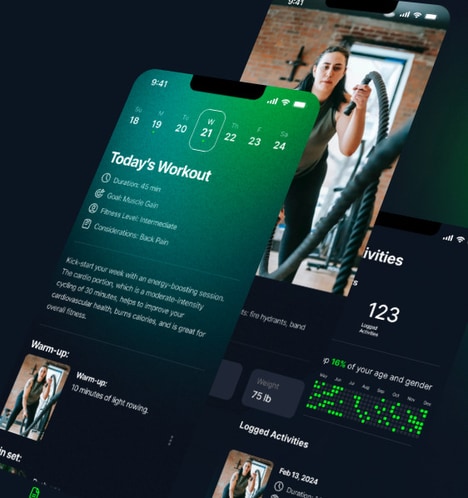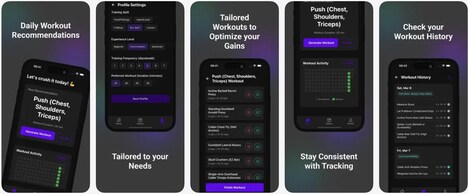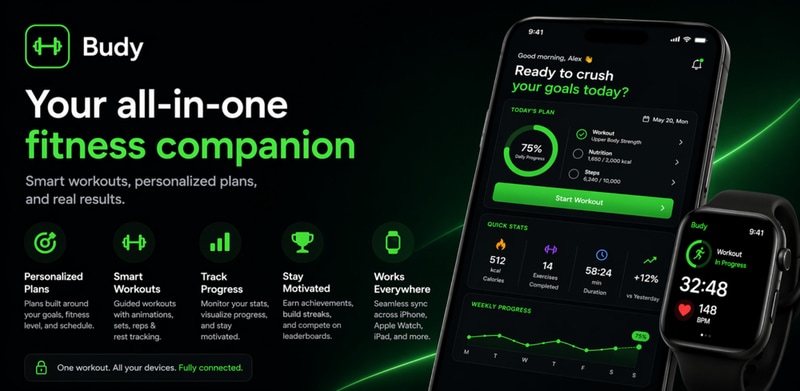
Budy has launched an AI-powered fitness platform available on iOS and Android that combines adaptive workout planning, integrated nutrition tracking, voice-guided coaching, and gamification within a single application. These capabilities are built on a unified context engine that aggregates training history, performance trends, nutrition adherence, health screening data, device sync, and engagement patterns to inform every AI decision.
Budy's AI-powered fitness platform includes accessibility as a core architectural feature, with health screening questionnaires, movement exclusion logic, and exercise alternative systems that generate seated and chair-based workout programs for users with disabilities, mobility restrictions, chronic injuries, and age-related limitations.
The AI-powered fitness platform also follows WCAG accessibility guidelines with screen reader compatibility and keyboard navigation support.
Image Credit: Budy
Key Themes Behind This Trend
- Contextualized Fitness Personalization
- A unified context engine that integrates training history, nutrition adherence, device data, and engagement patterns enables hyper-personalized program adjustments for each user's physiological and behavioral profile.
- Accessibility-first Exercise Design
- Built-In movement exclusion logic and seated alternatives expand fitness participation across disabilities, chronic injuries, and age-related mobility limits, reshaping market expectations for inclusive product design.
- Conversational and Multimodal Coaching
- Voice-guided coaching combined with screen reader compatibility and keyboard navigation creates multimodal interaction pathways that redefine how users receive real-time guidance and feedback.
Where This Applies
- Digital Health and Telemedicine
- Integration of health screening data and continuous performance metrics offers opportunities for remote clinical monitoring and preventive care models tied directly to lifestyle interventions.
- Rehabilitation and Assistive Technologies
- Chair-based programs and movement exclusion systems present new paradigms for rehabilitative protocols and assistive-device interoperability tailored to patient-specific mobility constraints.
- Wearables and Iot Fitness Devices
- Device sync and aggregated sensor streams enable ecosystem-level coordination between apps and wearables, supporting more accurate biometric-driven coaching and adaptive feedback loops.