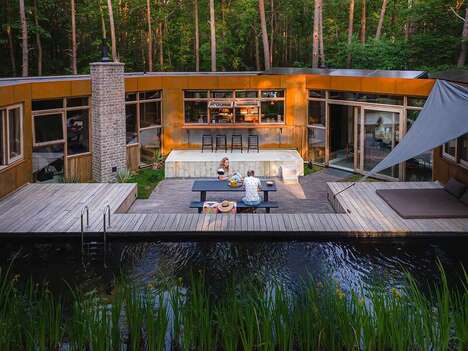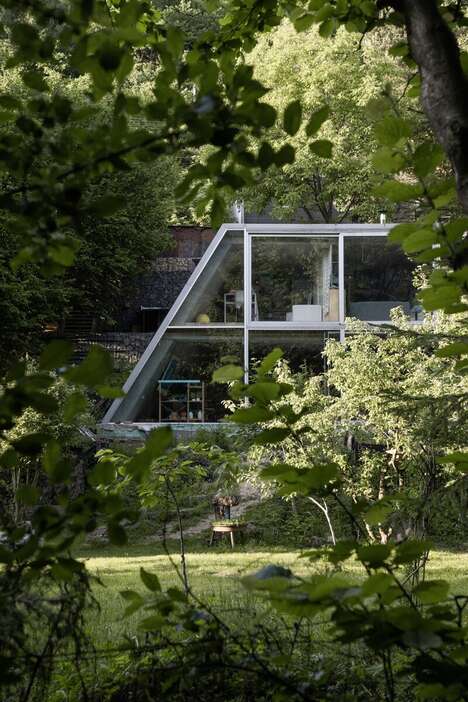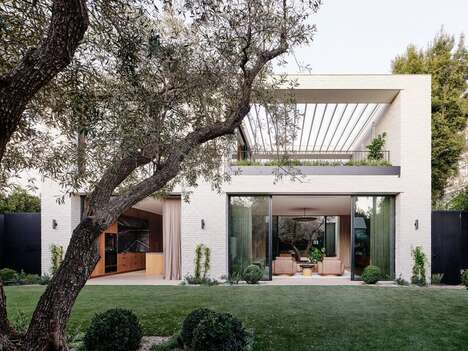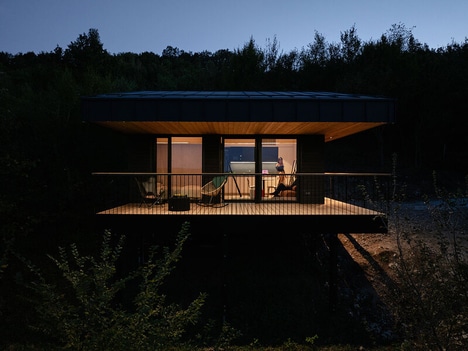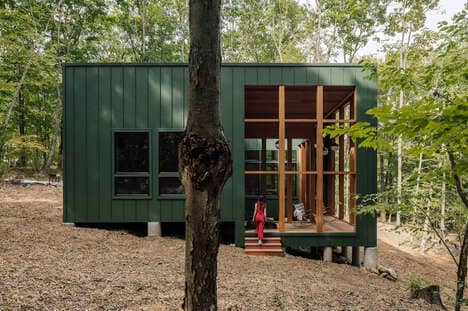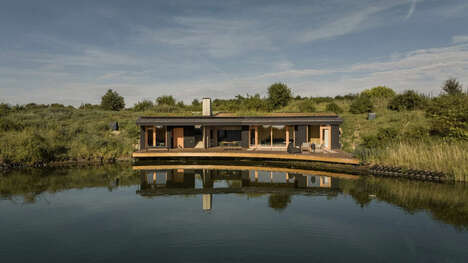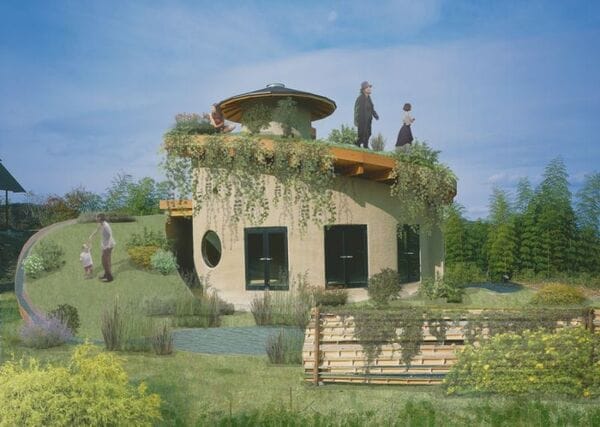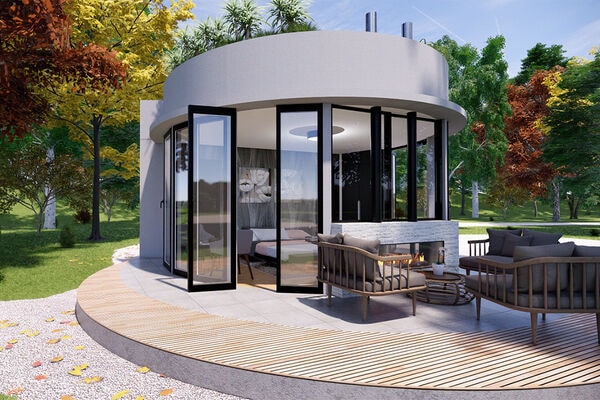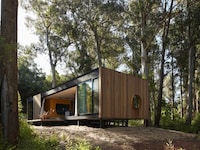

The 'Woodhouse 2.0' is a futuristic home that's designed to blend in seamlessly with the surrounding forest area to provide inhabitants with a tranquil escape from bustling city streets. The home is imagined in a pine oak forest in Long Island and is characterized by its circular design that allows inhabitants to drive right onto the top of the dwelling to access the interior via a staircase. The shell of the home is achieved using a combination of concrete with vertical wooden planks that work together to have it blend in to surrounding landscape.
The conceptual 'Woodhouse 2.0' wraps around a central courtyard, which allows maximum light to spill into all areas of the living space.
Image Credit: Filippo Bolognese / Marchi Architects
What Makes This Trend Stand Out
- Circular Architecture Design
- Opportunity for architects and designers to explore circular designs that seamlessly blend with natural landscapes.
- Forest-inspired Living Spaces
- Potential for creating homes that provide a tranquil escape by incorporating natural elements and surroundings.
- Sustainable Integration
- Opportunity for sustainable building materials and techniques to be integrated into architectural projects.
Sectors Adopting This
- Architecture and Design
- Design and construction firms can explore innovative circular designs for residential and commercial spaces.
- Real Estate
- Real estate developers can capitalize on the trend of forest-inspired living spaces to create unique properties that cater to nature enthusiasts.
- Sustainable Building Materials
- Manufacturers and suppliers of sustainable building materials can collaborate with architects to integrate eco-friendly solutions into circular architectural designs.