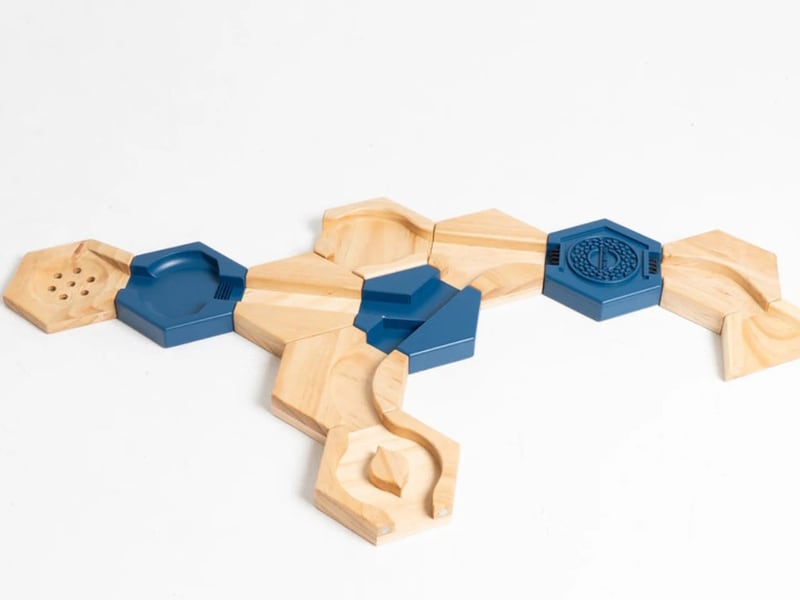
Wild Wetlands is an educational outdoor toy developed by Massey University students Cameron Murray, Corey Matheson, Jordan Gedye, and Rupert Shepherd that encourages children to learn about freshwater ecosystems through hands-on play. Designed for children aged 5 to 12, the modular game uses 11 interchangeable tiles to create flowing waterways that guide Tuna, the Māori name for eel, from wetlands to the ocean. Inspired by New Zealand's native eel migration, the game transforms environmental conservation into an interactive activity, allowing players to experiment with water flow while exploring the effects of natural and human-made waterways.
The modular system combines natural river-inspired tiles with industrial waterway pieces that represent dams and other man-made barriers affecting eel migration. Children can further alter water movement using rocks, sticks, and mud, encouraging open-ended experimentation and problem-solving. Constructed from recycled New Zealand pine, PLA, and exposed neodymium magnets, the tiles are designed for repeated outdoor use in wet environments.
Image Credit: Cameron Murray, Corey Matheson, Jordan Gedye, Rupert Shepherd
Why This Trend Is Growing
- Modular Eco-play
- Interchangeable outdoor learning systems create new potential for toys that merge environmental education, experimentation, and durable nature-based play.
- Watershed Learning Games
- Hands-on simulations of river flow and habitat disruption reveal opportunities for STEM products that make climate and conservation concepts tangible for children.
- Recycled Outdoor Toys
- Sustainable materials and weather-ready construction support emerging play formats where circular design becomes part of the educational experience.
Industries Being Reshaped
- Educational Toys
- Toy makers can differentiate through modular ecology-based products that combine curriculum-friendly science learning with open-ended physical interaction.
- Outdoor Recreation
- Family-focused recreation products are expanding beyond entertainment as backyard and park-based activities become platforms for environmental discovery.
- Environmental Education
- Conservation programs gain fresh relevance from interactive tools that translate complex ecosystem challenges into accessible, play-driven learning experiences.