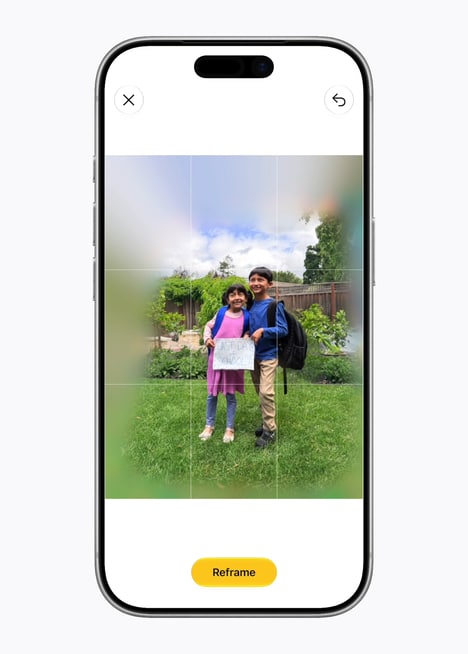
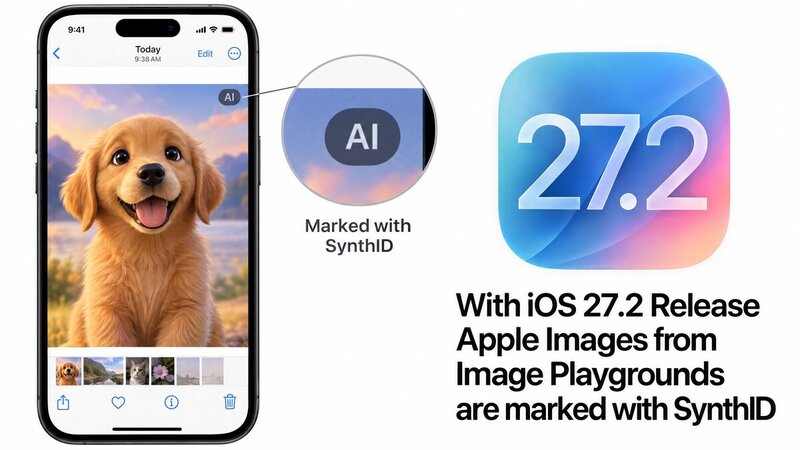
Apple now embeds an invisible SynthID watermark in pictures made with Image Playground on iPhone, giving iOS 27.2 users a way to identify when an image came from AI. It uses Google's system and is written into the pixels instead of the metadata, so the mark can remain after cropping or compression.
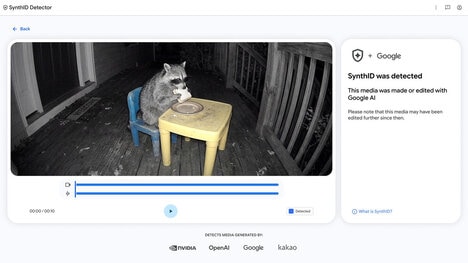
Freshly generated pictures always carry the tag, while edits in Photos pick it up only when the AI changes the shot enough to make it meaningfully synthetic. There is no iPhone-side reader, so verification runs through Google's SynthID Detector, which opened to everyone in early October.
By adopting Google’s SynthID rather than introducing a separate label, Apple makes AI-generated images identifiable through an existing verification system. Users still need Google’s SynthID Detector to check a picture, but the shared watermark gives them a way to verify images across platforms without relying on metadata that can be stripped away.
Image Credit: Apple
What's Driving This Trend
- Invisible AI Watermarking
- Pixel-level provenance systems create new value in media authentication by preserving AI disclosure through edits, compression, and platform transfers.
- Cross-platform Content Verification
- Shared detection standards expand trust infrastructure for synthetic media, enabling businesses to reduce fragmentation across competing device and software ecosystems.
- Synthetic Media Transparency
- Embedded identifiers in AI-generated visuals reshape digital trust by making authenticity signals more durable than traditional metadata-based labels.
Who This Affects Most
- Consumer Electronics
- Device makers gain differentiation through built-in provenance features that connect generative tools with broader verification networks.
- Digital Media
- Publishers and platforms benefit from persistent image authentication as synthetic visuals become harder to distinguish from human-created content.
- Cybersecurity
- Content forensics providers see growing relevance as watermark detection becomes part of fraud prevention, misinformation defense, and brand protection systems.