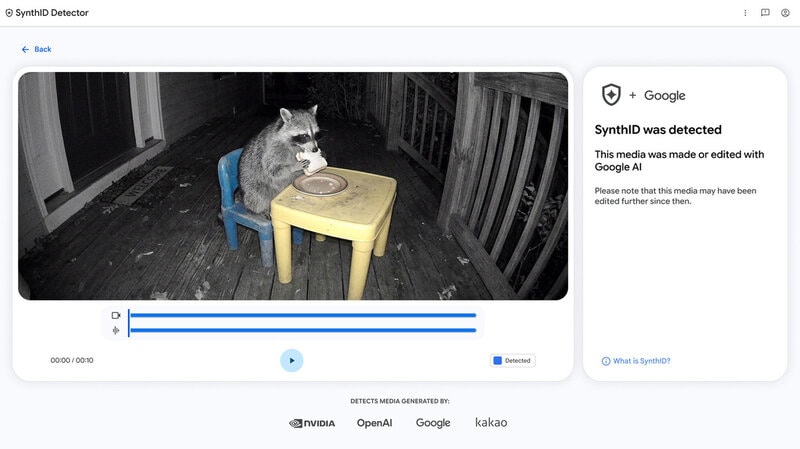
Google is opening SynthID Detector beyond journalists and other media professionals, letting anyone check whether a photo, video, or audio clip carries an AI watermark. The free browser-based site reads SynthID, Google's marker for AI-made or AI-edited media, including content from compatible outside tools.
The detector also looks for marks in edited files, not just fully synthetic ones, so a quick scan can catch touch-ups as well as wholly generated media. Apple Intelligence support is due soon, which would extend those checks to images made with features such as Image Playground.
Putting the checker on its own free website trims a step compared with finding similar detection inside Circle to Search or the Gemini app. Its reliance on SynthID watermarks and C2PA credentials still leaves gaps, but the wider rollout gives Google a more visible role in AI verification.
Image Credit: Google
Key Themes Behind This Trend
- Public AI Verification
- Free consumer-facing detectors create new trust layers for everyday media sharing, opening space for verification badges, browser extensions, and platform-native authenticity cues.
- Watermarked Synthetic Media
- Persistent markers embedded in AI-generated and AI-edited files can support provenance systems that follow content across creation tools, social platforms, and publishing workflows.
- Cross-platform Content Credentials
- Compatibility between watermarking standards and major device ecosystems expands the market for interoperable authenticity infrastructure across images, video, and audio.
Where This Applies
- Digital Media
- Newsrooms, creators, and publishers gain stronger mechanisms for identifying synthetic assets, supporting differentiated services around verified storytelling and trusted distribution.
- Social Networking
- Platforms handling high volumes of user-generated content can build authenticity signals into moderation, sharing, and advertising environments as synthetic media becomes more common.
- Cybersecurity
- Media provenance tools broaden security capabilities beyond malware and identity protection into fraud detection, impersonation defense, and misinformation risk management.