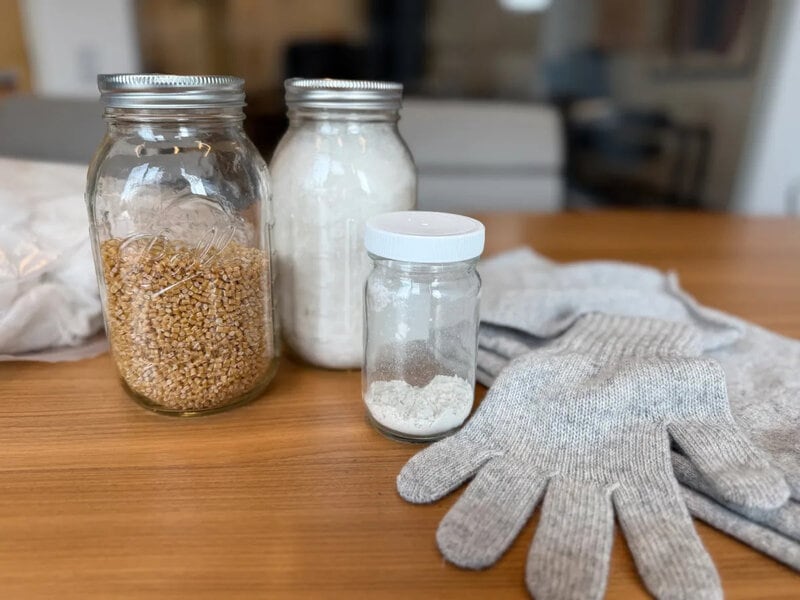
Everbloom is preparing 'renoa' for people who want cashmere-style knitwear without the delicate care it requires. The material is designed to mimic animal fibers while remaining washable, and the first products using it are expected to reach the market in the second quarter of 2027.
Renoa uses protein waste, such as cashmere offcuts and feather lint, blended with a biodegradable biopolymer and formed into fiber. Early consumer pieces are likely to use about 20% renoa in a cashmere blend, and sample scarves have already withstood washing and tumble drying without visible pilling or shrinkage.
U.S. recognition as a new fiber class after 25 years gives apparel brands a clearer path to label and sell the material. Washability turns a luxury-touch fabric into something closer to everyday knitwear, broadening where cashmere-like softness fits in the category.
Image Credit: Tim De Chant/TechCrunch
Why This Trend Is Growing
- Washable Luxury Fibers
- Premium-feel textiles with machine-wash durability are reshaping luxury knitwear by making delicate aesthetics more compatible with everyday wardrobes.
- Protein Waste Materials
- Discarded animal-fiber remnants and feather byproducts are becoming feedstocks for high-value fabrics, creating new circular material pathways in apparel.
- Bio-based Fiber Blends
- Hybrid fibers combining waste proteins with biodegradable polymers are expanding the performance and sustainability profile of next-generation textiles.
Industries Being Reshaped
- Apparel and Fashion
- Brands gain room to commercialize softer, lower-maintenance knitwear that preserves luxury positioning while reaching broader consumer use cases.
- Textile Manufacturing
- Mills and fiber developers are positioned to scale alternative fiber classes that blend familiar handfeel with improved care and waste-reduction benefits.
- Sustainable Materials
- Recognition of novel bio-derived fibers supports a growing market for circular inputs that transform waste streams into branded consumer products.