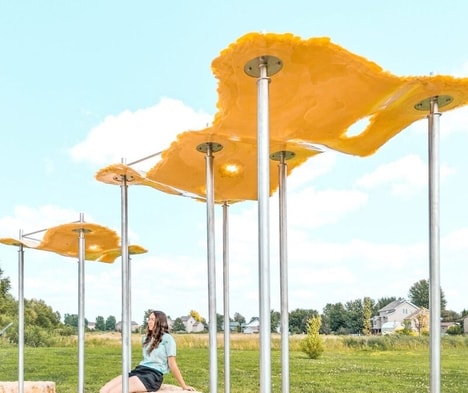
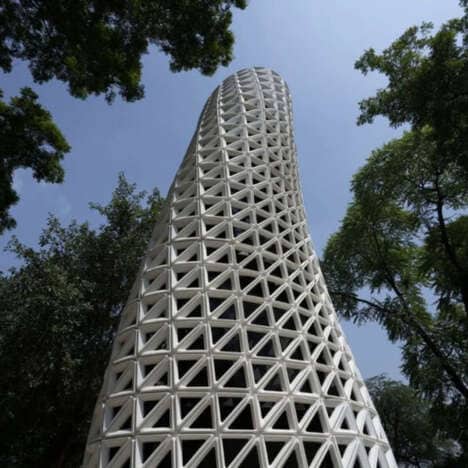
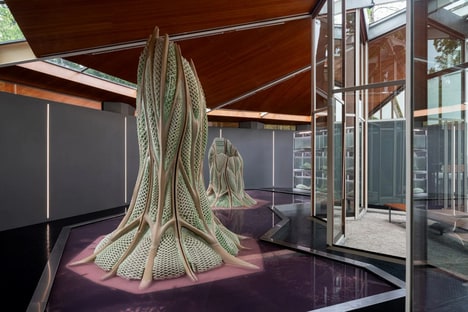
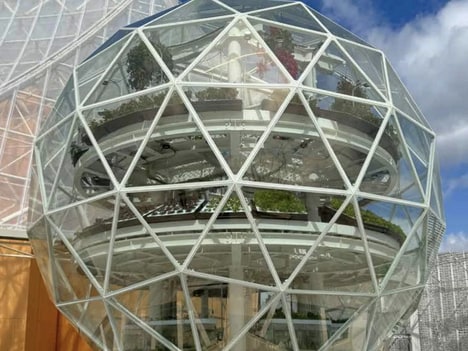
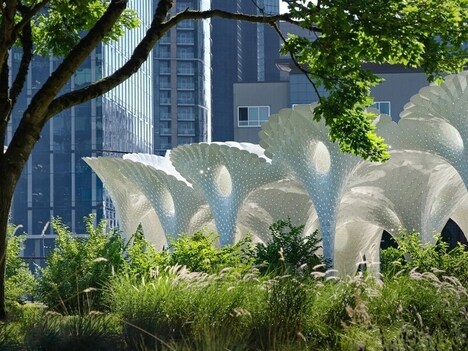
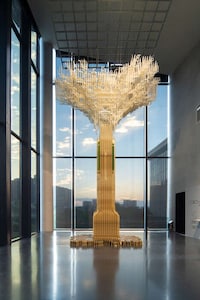
The Urban Algae Canopy is not simply a public sculpture create to make its immediate surrounding more interesting. It was designed to clean the air in cities. The first of its kind, it "uses micro-algae photosynthesis to produce the same amount of oxygen as four hectares of woodland" as well as up to 330 pounds of biomass per day, reports Psfk. Part of a movement called algaetecture, the Urban Algae Canopy could make a huge impact on people's lives as well as the environment.
Designed by ecoLogicStudio, the Urban Algae Canopy boasts a custom-designed four-layer ETFE cladding system and a CNC welded frame. Part of the studio's HORTUS series, the bio-digital structure will be part of the EXPO Milan 2015 Future Food Project curated by Italy-based architectural practice Carlo Ratti Associati.
Key Themes Behind This Trend
- Algaetecture Movement
- The algaetecture movement could bring significant benefits to the construction industry by rethinking building materials and eco-friendly infrastructure designs.
- Bio-digital Structure Design
- The bio-digital structure design presents fantastic business opportunities for architects to create sustainable and eco-friendly urban structures.
- Micro-algae Sustainable Solutions
- The use of micro-algae for sustainable solutions could disrupt the agriculture and food industry as a feasible source of biomass.
Where This Applies
- Architecture Industry
- The algae canopy represents untapped opportunities for architects to create more sustainable and eco-friendly structures in urban environments.
- Construction Industry
- The construction industry stands to benefit from a potential shift towards more eco-friendly building materials such as micro-algae.
- Agriculture Industry
- The use of micro-algae for sustainable solutions could disrupt the agriculture and food industry as a feasible source of biomass.