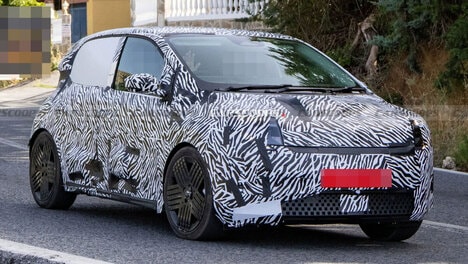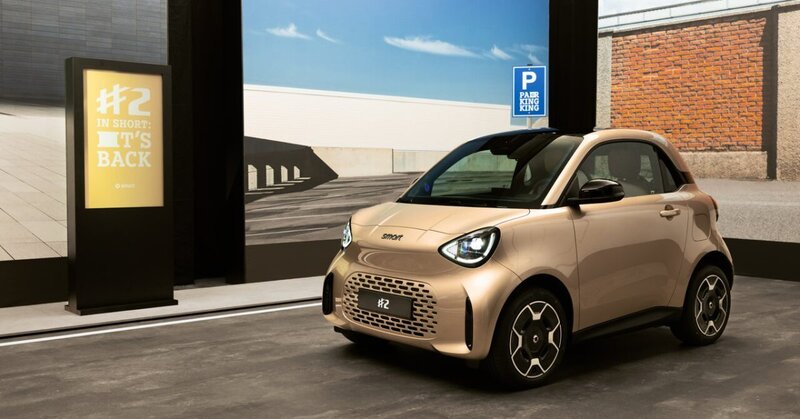
Smart, the Mercedes-Benz and Geely joint venture, is bringing back its two-seat Fortwo formula with the all-electric Smart #2, a successor that achieves 290 km on the WLTP European range test and adds DC fast charging. That gives urban drivers in Europe a tiny car that is less tied to short in-town trips than the last EQ Fortwo.
Orders in Europe open tomorrow, with deliveries slated for 2027. The car starts at €19,990 in Germany, and a roughly 20-minute DC recharge makes its small-battery format easier to use beyond short errands.
At €19,990, Smart turns the revived two-seater into a direct test of how much value city drivers place on size itself. Matching mainstream small-EV pricing while keeping only two seats narrows the audience, but it keeps a parking-first niche alive on dense European streets.
Image Credit: smart
Why This Trend Is Growing
- Parking-first Evs
- Compact electric models built around easy urban parking highlight white space for vehicles that trade seating capacity for dense-city convenience.
- Fast-charging Microcars
- Small-battery city cars with rapid DC charging create room for more flexible short-range mobility without the cost and weight of larger packs.
- Two-seat Urban Mobility
- A renewed focus on two-seat layouts reflects emerging demand for purpose-built commuter vehicles in crowded European markets.
Industries Being Reshaped
- Electric Vehicles
- Urban EV specialization is reshaping product portfolios by separating compact city use cases from broader family-car expectations.
- Urban Transportation
- Dense mobility networks can be complemented by ultra-compact private vehicles that reduce parking pressure while preserving personal ownership.
- Automotive Charging
- Faster charging support for micro-EVs expands infrastructure relevance beyond long-range cars and into daily metropolitan travel patterns.