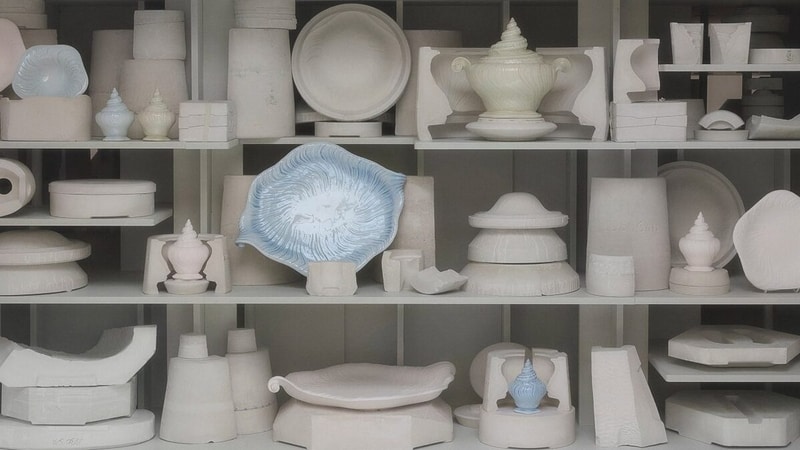
Royal Copenhagen has revived selected pieces from the Triton dinnerware collection, originally designed by jeweller Arje Griegst in 1976. Reintroduced during the 2026 edition of 3 Days of Design, the collection brings back five porcelain pieces distinguished by sculptural conch-shell handles and fluid organic forms. The reissued range includes a dish, a tureen, two plates, and a bonbonniere, all finished in ocean, sand, and celadon underglaze colours. The revival was developed in collaboration with Griegst’s son, Noam Griegst, and draws directly from the original moulds used for the historic collection.
The launch was accompanied by a cabinet of curiosities-style installation that explored the collection’s history and craftsmanship. Original moulds, plaster forms, and process materials were displayed alongside finished pieces to highlight the complex production methods behind the designs. The ornate detailing that once limited large-scale manufacturing has been preserved through the restoration of the original moulds by master craftsperson Bo Jørgensen, who apprenticed under Arje Griegst when Triton was first created.
Image Credit: Royal Copenhagen
Why This Trend Is Growing
- Heritage Design Reissues
- Legacy brands are finding new value in archived collections as limited revivals combine cultural provenance, scarcity, and contemporary luxury appeal.
- Craftsmanship Transparency
- Behind-the-scenes production displays are turning molds, materials, and artisan processes into brand storytelling assets that deepen consumer engagement.
- Organic Porcelain Forms
- Sculptural tableware inspired by shells, fluid shapes, and natural palettes reflects growing demand for functional objects with collectible design presence.
Industries Being Reshaped
- Luxury Homeware
- High-end tabletop brands have room to differentiate through historically rooted reissues that merge decorative art, rarity, and modern entertaining rituals.
- Ceramic Manufacturing
- Advanced restoration of legacy molds and specialized hand-finishing techniques can reshape small-batch porcelain production around archival precision and premium pricing.
- Experiential Retail
- Cabinet-of-curiosities installations and process-led exhibitions create immersive purchase environments where product heritage becomes part of the commercial experience.