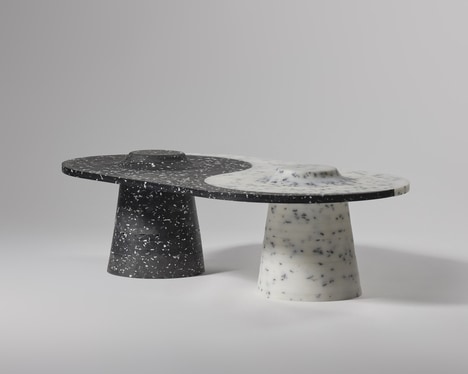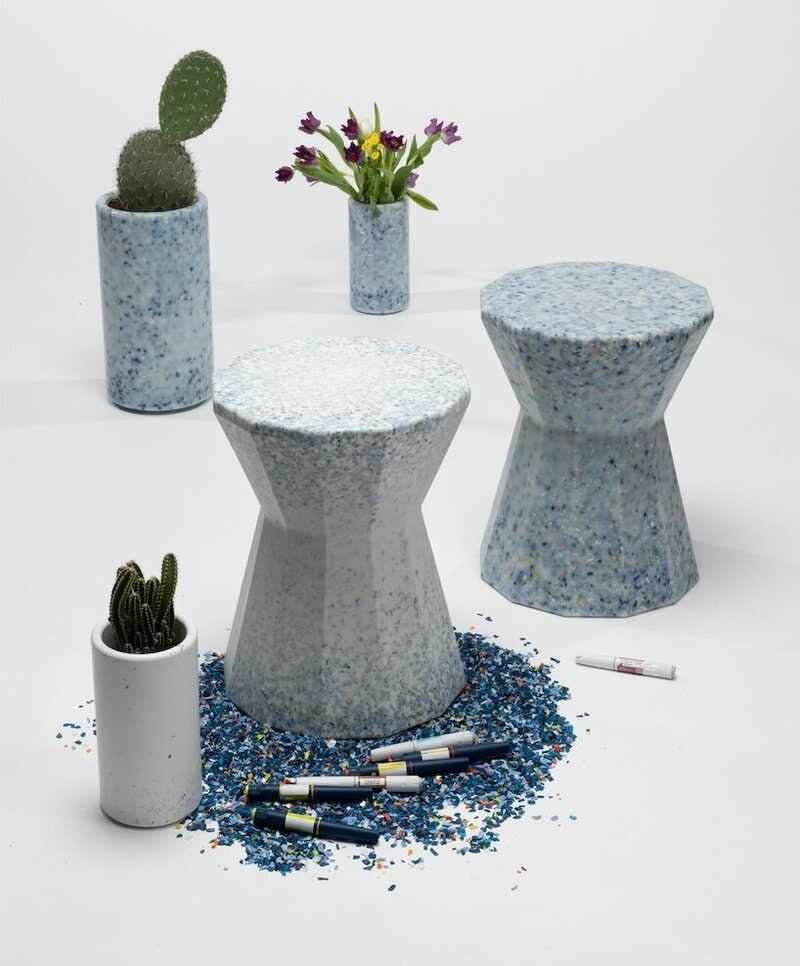
SMALLrevolution makes furniture and interior products from discarded plastic while keeping each material’s past visible to the people using them. The Danish design and manufacturing company records where the plastic came from, so users get objects that show their prior life instead of masking it with a uniform finish.
In aviation, ‘GuideU’ emergency floor markings from Lufthansa Technik are remade as furniture and other interior pieces, and their glow-in-the-dark function stays intact. SMALLrevolution also keeps original colors and textures rather than adding pigments or virgin plastic, which makes the recycled source legible at a glance.
Since 2021, SMALLrevolution has put more than 66 metric tons of plastic back into commercial value chains, showing how traceable recycling can become a practical B2B buy for healthcare and aviation partners, while visible material history makes waste reduction part of the finished product rather than a hidden back-end process.
Image Credit: SMALLrevolution, designboom, smallrevolution.dk
What's Driving This Trend
- Traceable Material Storytelling
- Visible sourcing histories turn recycled inputs into product features, creating opportunities for brands to differentiate sustainability claims through physical transparency rather than abstract reporting.
- Functional Waste Preservation
- Retaining original properties such as glow-in-the-dark performance expands the value of discarded industrial materials beyond aesthetics and into new commercial product functions.
- Unmasked Recycled Design
- Products that preserve original colors, textures, and markings challenge conventional premium finishes and open space for circular goods with recognizable material provenance.
Who This Affects Most
- Furniture
- Commercial interiors gain new value from furnishings that make recycled origins visible, supporting differentiated procurement choices for workplaces, healthcare spaces, and public environments.
- Aviation
- Aircraft components and operational materials can enter secondary design markets, extending asset lifecycles while preserving recognizable industry-specific functions and identities.
- Healthcare
- Institutional buyers can use traceable recycled products to connect sustainability goals with tangible interior assets that communicate waste reduction to staff, patients, and visitors.