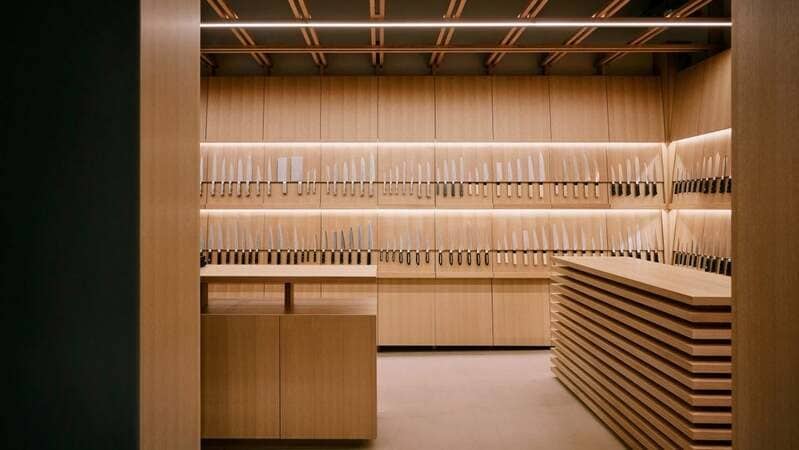
The Tojiro Knife Gallery Osaka highlights visible craftsmanship by dividing its compact 40-square-metre interior into a sharpening workshop and a timber-lined gallery. Katata Yoshihito Design uses cast-iron columns, exposed brickwork and anodised steel displays to present the knives while allowing visitors to watch craftspeople sharpen and repair blades through a glazed partition. The facade is finished with galvanised spangle panels that reference the manufacturer’s factory environment, and the interiors echo traditional carpentry through carefully detailed wooden frames. The layout encourages visitors to understand how each tool is made and maintained.
The project promotes long-term use by merging retail with service, creating a space that feels closer to a studio than a shop. The visible workshop reinforces the value of upkeep, while the restrained material palette focuses attention on form and process. The design aligns with the principle of caring for objects through skill, clarity and transparency.
Image Credit: L/O
Why This Trend Is Growing
- Retail-craftsmanship Integration
- Merging retail spaces with active craft workshops offers a transparent experience that educates consumers and promotes appreciation for artisanal skills.
- Visible Manufacturing Spaces
- Retail environments featuring visible production areas create enhanced customer engagement by showcasing the craftsmanship and dedication behind the products.
- Minimalist Material Focus
- Using a minimalist material palette in design highlights the importance of form and process, encouraging sustainable consumption and appreciation of quality.
Industries Being Reshaped
- Artisanal Knife Retail
- The combination of retail and workshop environments in knife galleries offers consumers an educational and interactive buying experience that highlights skilled craftsmanship.
- Experiential Retail Design
- Retail spaces that incorporate elements of traditional craftsmanship provide immersive customer experiences, elevating brand value and engagement.
- Timber-based Interiors
- Incorporating traditional carpentry and timber-lined interiors allows retailers to connect with heritage aesthetics while promoting craftsmanship and quality awareness.